In most homes, you can find and fix gutter leaks in a single weekend.
Why are gutters leaking? Read on N Gutter’s Guide:
- Most common cause: clogs that push water over the edge or through seams
- Quick fixes: cleaning, resealing joints, rehanging hangers
- Typical DIY cost: $10 to $60 in sealant, hangers, or splash supplies
- Typical pro repair: $150 to $400 per problem area
- Biggest risk: foundation damage and basement water
Why Are My Gutters Leaking?
Gutters usually leak from clogs, separated seams, small cracks or rust holes, an incorrect slope, loose hangers, cracked corners, or blocked downspouts.
Clean the gutters first, then run a hose test to find the exact failure point and seal or repair that spot. Or call a gutter pro.
A Leaking Gutter Is Never “Just a Drip”
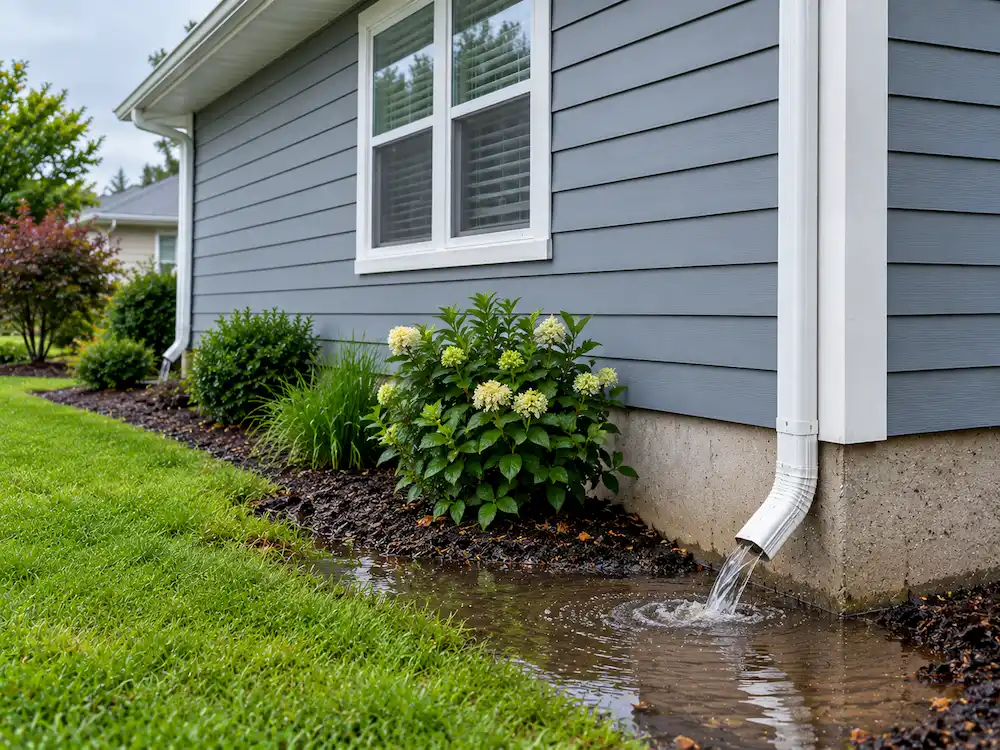
Gutters move roof water away from your house. A leak dumps that water in one concentrated spot instead, storm after storm, right next to your foundation or behind your fascia board.
The numbers behind water damage are sobering. Water damage and freezing made up nearly 28 percent of homeowners insurance losses, and the losses repeat every year.
Insurance often refuses gradual damage, which is exactly the kind a slow gutter leak causes.
Moisture brings a second problem: mold. The EPA warns that mold can start growing within 24 to 48 hours on wet surfaces, and it points to condensation and persistent dampness as warning signs.
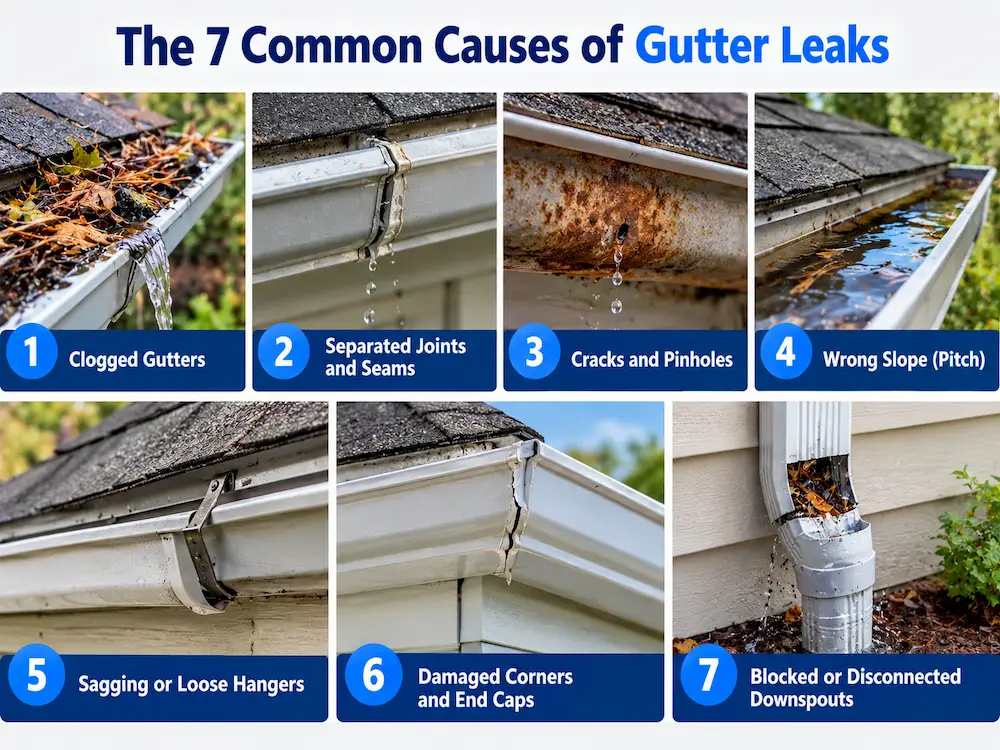
The 7 Common Causes of Gutter Leaks
1. Clogged Gutters
Leaves, shingle grit, and twigs dam up the channel. Water then spills over the edge or forces its way through the seams, and it looks exactly like a leak. This is the #1 cause behind most “leaking gutter” calls we get.
The fix: scoop the debris, flush the gutter with a hose, and confirm water flows to the downspout. If you spot the classic clogged gutter drain symptoms, such as overflow during rain or plants growing in the channel, cleaning solves the problem.
2. Separated Joints and Seams
Sectional gutters meet at joints sealed with caulk or rubber gaskets. Sun, ice, and age break that seal down, and water drips straight through the gap.
The fix: clean the joint, let it dry, and apply gutter sealant inside the seam. If the sections have pulled apart, reconnect them first. Our gutter parts guide helps you identify each joint type before you buy supplies.
3. Cracks and Pinholes
Steel gutters rust through over time, and even aluminum develops pinholes where debris sat wet for years. These leaks show up as steady drips from the bottom of the channel.
The fix: scrub the area to bare metal, dry it, and cover the hole with gutter sealant or a patch of metal flashing. Pinholes are cheap to fix. Long rusted sections mean that piece of gutter is done.
4. Wrong Slope (Pitch)
Gutters need a slight tilt, about a quarter inch of drop for every 10 feet, so water runs toward the downspout. A flat or backward slope leaves standing water that finds every weak seam.
The fix: run a string line from the high end to the downspout and check the drop. Bend hangers or remount brackets until water flows. Persistent pooling after cleaning almost always points to slope, not leaks.
5. Sagging or Loose Hangers
Hangers and spikes hold the gutter to the fascia. When they loosen, the gutter sags, water pools at the low spot, and the weight pulls the gutter further off the board. Snow and ice speed this up fast.
The fix: replace spikes with screw-in hidden hangers, spaced about every two feet. While you are up there, confirm the right gutter sizes for your roof area, because undersized gutters overflow even when they are clean and sloped.
6. Damaged Corners and End Caps
Mitered corners and end caps carry factory or field-applied seals that crack with movement and temperature swings. Corners leak more than any other single spot on older systems.
The fix: scrape out the old sealant completely, dry the corner, and reseal with a generous bead of gutter sealant inside the joint. Replace the corner piece if it is cracked or bent.
7. Blocked or Disconnected Downspouts
A downspout jammed with debris backs water up into the gutter until it overflows or leaks at the outlet. An elbow that has separated drops water straight down your siding.
The fix: tap the downspout along its length; a dull thud means a clog. Disconnect the bottom elbow and flush upward with a hose. Discharge matters too: aim water at least five feet from the foundation with an extender.
Where the Leak Appears Tells You the Cause
After years of service calls, we can usually name the cause from the leak’s location alone.
Use this summary table before you even climb the ladder.
| Where you see water | Most likely cause | First move |
|---|---|---|
| Pouring over the front edge | Clog or bad slope | Clean, then check pitch |
| Dripping at a seam mid-run | Failed joint sealant | Reseal the joint |
| Dripping at corners | Cracked miter seal | Scrape and reseal |
| Water behind the gutter | Loose hangers or missing flashing | Refasten; check the drip edge |
| Steady drip from the channel bottom | Pinholes or rust-through | Patch or replace the section |
| Backup at the downspout outlet | Downspout clog | Flush the downspout |
Water behind the gutter deserves special attention. That path rots the fascia board and soaks the wall cavity, and the fix sometimes involves the drip edge that tucks roof water into the gutter in the first place.
Sectional vs. Continuous Gutters
Sectional gutters come in 10-foot pieces joined with connectors. Every joint is a future leak point, and older systems can have dozens. Most of the seam and corner repairs above exist because the system is sectional.
Continuous gutters are roll-formed on site as single runs, so leaks concentrate at corners, outlets, and end caps only. If you are resealing the same sectional joints every year, the honest math favors a continuous system.
That said, a well-maintained sectional system serves fine for decades. Sealed joints, correct slope, and clean channels matter more than the gutter type.
What a Leak Does to Your Fascia and Foundation
The gutter itself is the cheapest part of this story. The wood and soil around it are the expensive parts.
Water running behind a gutter soaks the fascia board, and soft, discolored, or crumbling fascia means the rot has started. Left alone, it reaches the soffit and roof edge, where repair bills jump from hundreds to thousands.
At ground level, concentrated overflow saturates the soil beside your foundation.
Repeated soaking erodes that soil and feeds basement moisture. Contractors aim downspout discharge at least five feet from the wall for exactly this reason, using splash blocks or extenders.
This is why we push homeowners to fix drips the week they spot them. A repair in September often prevents a $15,000 damage later.
How to Find the Exact Leak: The Hose Test
Guessing wastes weekends. The hose test finds the real failure point in minutes.
Pick a dry day and give yourself an hour. Most homeowners finish with two to five marked drip points, and almost all of them trace back to the seven causes above.
- Clean first. Scoop and flush the gutters so clogs do not confuse the results.
- Start low. Run water from a hose at the end farthest from the downspout.
- Watch from below. Have a helper mark every drip point with chalk or tape.
- Work in sections. Move the hose every 10 feet so each area gets a clear test.
- Inspect dry seams too. Stains, tiger striping, and green algae mark chronic leak paths even when dry.
Every drip you mark is one of the seven causes above. Match the spot to the cause, then apply the matching fix.
When Leaks Show Up
Gutter leaks follow the calendar. Fall brings clogs as leaves drop, and the first hard rain after leaf-drop is when most “sudden” leaks appear. Winter adds ice, which pries seams apart and can split aluminum at the joints.
Spring reveals winter’s damage: pulled hangers, separated corners, and sections sagging from snow load. A spring inspection catches these before the heavy rain season turns them into fascia rot.
Summer storms test capacity. Short, intense downpours overwhelm undersized or clogged systems even when nothing is technically broken. If your gutters only fail in downpours, think volume and slope before you think sealant.
How to Keep Gutters From Leaking Again
Leaks are a maintenance problem long before they are a repair problem. Four habits stop nearly all of them:
- Clean twice a year. Late fall and late spring cover the heavy debris seasons.
- Inspect after big storms. A two-minute look from the ground catches sagging and separated elbows early.
- Consider guards. They cut debris buildup and mid-storm clogs, though they are not magic. Weigh the gutter guard pros and cons before you spend.
- Watch the discharge. Downspouts should dump water at least five feet from the house, every storm, every season.
FAQs
Should I repair or replace a leaking gutter?
Repair when the damage is local: one seam, one corner, a few pinholes. Replace when you see widespread rust, multiple failing sections, or gutters over 20 years old with repeat problems. Endless resealing of a dying system costs more than replacement within a few seasons.
Why does my gutter leak only during heavy rain?
That pattern points to capacity, not damage. The gutter fills faster than the downspout can drain, so water escapes at seams and corners. Cleaning, adding a downspout, or fixing the slope usually solves it.
Does homeowners insurance cover gutter leak damage?
Usually not for gradual damage. Policies cover sudden events like a storm tearing a gutter off, but they treat slow leaks and rot as maintenance issues.
Why does water run behind my gutters instead of into them?
Water behind the gutter usually means a gap between the gutter’s back edge and the roofline. Causes include loose hangers letting the gutter tilt forward, a missing or short drip edge, or a gutter mounted too low. Refasten the gutter tight to the fascia and check that the drip edge tucks into the channel.