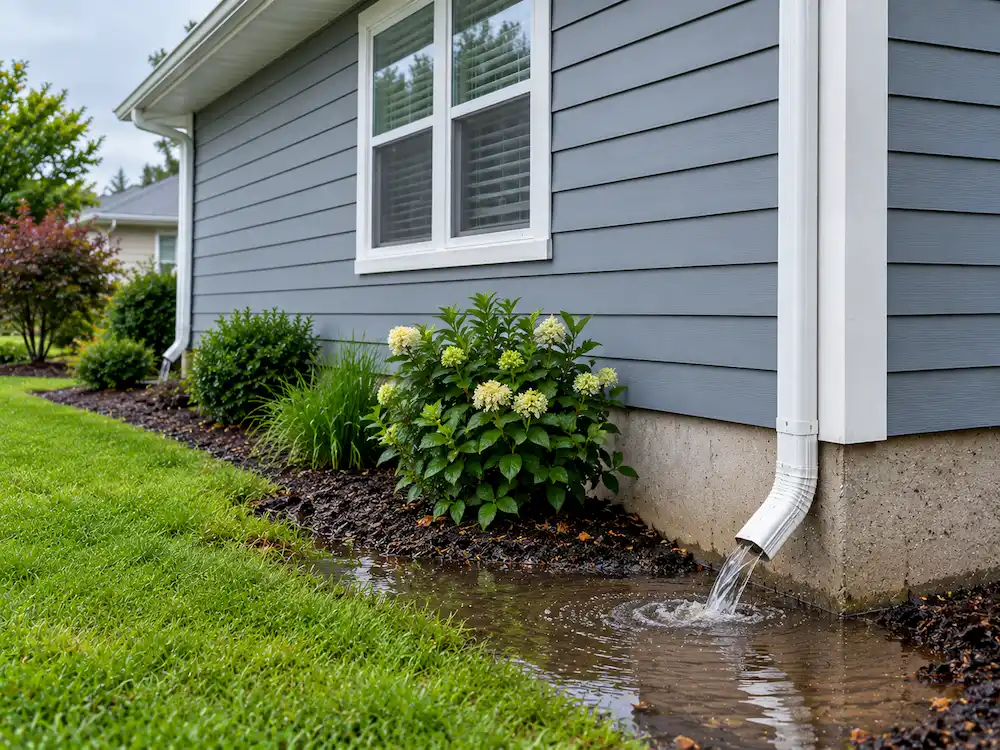
After two decades running N Gutter, I’ve seen what happens when homeowners ignore clogged gutters. The problems start small. They rarely stay that way.
Let me show you exactly what happens when gutters fail and how to catch these issues before they reach your wallet.
8 Common Problems Caused by Clogged Gutters
1. Foundation Damage and Basement Flooding
Your home sits on its foundation for a reason. That concrete or masonry base transfers weight to the ground and keeps your living space dry. Clogged gutters attack this critical structure directly.
Here’s the math that matters.
A half-inch of rain falling on a 1,000-square-foot roof produces 300 gallons of water. When gutters work properly, those 300 gallons travel through downspouts and discharge away from your home. When gutters clog, that water pours over the edges and pools against your foundation.
Soil absorbs this water and expands. As it dries, it contracts. This cycle creates pressure against foundation walls and leads to cracks. Water follows those cracks into your basement or crawlspace.
Look for these warning signs:
- Vertical or diagonal cracks in foundation walls
- Doors and windows that stick or won’t close properly
- Standing water near the foundation after rain
- Musty basement odors that weren’t there before
Basement flooding often starts with gutters you couldn’t see from the ground. Water seeks the path of least resistance. If that path leads through your foundation wall, you’ll find it in your finished basement.
2. Roof Rot
Your roof sheds water. That’s its job. But when gutters clog, water backs up onto the roof surface and finds ways underneath shingles.
Standing water on your roof does more than look unsightly. It saturates shingle edges and works its way under protective layers. Over time, this causes roof leaks that damage attic insulation, ceiling drywall, and even interior walls.
Check your attic after heavy rain or snowmelt. Look for:
- Dark streaks on rafters or decking
- Wet insulation (it clumps and loses loft)
- Water stains on ceiling below
3. Fascia, Soffit, and Structural Wood Rot
The wood directly behind your gutters takes the first hit. Fascia boards run along your roofline and support the gutters themselves. Soffits fill the space underneath.
When water overflows from clogged gutters, it doesn’t just fall straight down. It runs back against these wood components and soaks in. Wood absorbs moisture, holds it, and eventually rots.
Rotting eaves create entry points for more than water. Carpenter ants specifically target moist wood. They establish colonies in exactly the areas that clogged gutters create. By the time you notice ants inside your home, the structural damage behind your gutters may already require replacement.
Signs of fascia and soffit damage include:
- Gutters pulling away from the house
- Visible sagging along the roofline
- Soft or spongy wood when probed
- Small piles of sawdust
Replacing rotten fascia boards costs significantly more than cleaning gutters. The labor involves removing gutters, cutting out damaged wood, fitting new boards, painting, and reinstalling the gutter system.
4. Pest Infestations and Mold Growth
Your gutters collect more than leaves. They trap twigs, seeds, pine needles, and windblown debris. This organic material holds moisture and decays. For pests, it’s a five-star hotel.
Mosquitoes breed in standing water. A clogged gutter with a slow-draining downspout creates dozens of small pools perfect for egg laying. One gutter can produce thousands of mosquitoes over a single summer.
Cockroaches, ants, and flies find food and shelter in decomposing gutter debris. From there, they access your attic through roof vents or gaps in eaves. Birds build nests in clogged gutters, adding more debris and blocking water flow completely.
Mold presents a different risk. When water overflows and soaks exterior walls, moisture migrates inside. Dark, damp wall cavities grow mold species that release spores into your living space. Gutter mold directly connected to clogged systems sends families to doctors with respiratory complaints.
Watch for these pest and mold indicators:
- Mosquito activity near your house (not just standing water elsewhere)
- Birds repeatedly landing on specific gutter sections
- Dark streaks on siding below gutters
- Allergy symptoms that improve when you leave home
5. Landscape Erosion and Driveway Damage
Your landscaping cost money and time to establish. Clogged gutters undo that work without warning.
Water pouring over gutter edges concentrates flow in specific areas. This runoff carves channels through flower beds, washes away mulch, and exposes plant roots. The soil that once supported your plantings ends up in the street or your neighbor’s yard.
Trees near your home create additional risk. Root systems naturally grow toward water sources. When gutters dump water consistently in one area, roots follow. Those roots eventually grow under driveways, sidewalks, and even your foundation. As roots expand, they lift and crack concrete. Heaving driveway sections require expensive replacement.
Foundation plantings suffer double damage. They get drowned by excess water while simultaneously having their soil washed away. Even hardy shrubs die when their roots sit in constantly saturated ground.
Signs of landscape damage from gutters:
- Erosion gullies forming below gutter sections
- Mulch washed onto sidewalks or driveways
- Plants turning yellow or dying in specific zones
- Driveway cracks that follow a pattern from one side
6. Exterior Staining and Paint Failure
Water carries dirt. When it overflows gutters, it deposits that dirt on your siding. Those brown streaks you see on light-colored houses? That’s gutter failure made visible.
Peeling paint on siding happens when moisture sits against exterior surfaces. Paint loses adhesion when the wood underneath stays wet. Once paint peels, bare wood exposes to more moisture, and rot accelerates.
Staining often appears worse than structural damage actually is. But here’s what matters: the stains tell you where water goes. Follow the stains up. They lead to gutter problems. Follow them down. They show you where water pools against your foundation.
Different siding materials react differently:
- Wood siding absorbs water and rots
- Vinyl siding hides moisture behind it
- Brick and masonry develop efflorescence (white mineral deposits)
- Stucco cracks when saturated then freezes
7. Gutter System Failure and Sagging
Your gutters have weight limits. When filled with dry leaves, they handle the load. When those leaves get wet and pack down, weight multiplies.
Debris-filled gutters also hold water. Water weighs 8.3 pounds per gallon. A 40-foot gutter section filled with soaked leaves and standing water can easily exceed 300 pounds. Your gutter hangers weren’t designed for that.
Sagging gutters result from this overload. Brackets pull away from fascia. Gutters separate at seams. Downspouts detach from elbows. The entire system fails precisely when you need it most.
Once gutters sag, they no longer slope properly toward downspouts. Water sits in low spots and accelerates rust and corrosion. Steel gutters rust through. Aluminum gutters warp and separate. Seams that never leaked before begin dripping constantly.
Look for these gutter failure signs:
- Visible gaps between gutter and roofline
- Standing water in gutters days after rain
- Separation at corners or joints
- Rust streaks (steel gutters) or white corrosion (aluminum)
8. Ice Dams and Winter Weather Hazards
Winter adds complexity to clogged gutter problems. Snow accumulates on roofs. Attic heat escapes through poor insulation and melts snow at the ridge. Water runs down to cold eaves, hits clogged gutters, and freezes.
The ice dam grows thicker. Water pools behind it. That water has nowhere to go but under shingles. Once inside your home, it stains ceilings, soaks insulation, and damages drywall.
Ice buildup in gutters also creates physical safety hazards. Heavy ice sections break free and fall. They damage anything below such as shrubs, cars, air conditioning units. People walking below risk serious injury from falling ice.
Icicles look picturesque. They also signal active ice dam formation. Those hanging ice spikes mean water is flowing over your gutters and freezing on the way down.
Prevent winter gutter problems by:
- Cleaning gutters thoroughly before first snow
- Ensuring downspouts drain completely and there is no standing water
- Checking attic insulation to prevent heat loss
- Removing snow from roof edges when safely possible
How to Check for Clogged Gutters
You don’t need to risk a fall to check your gutters. Professional inspection starts from the ground. Here’s what we look for at N Gutter.
First, watch it rain.
Stand inside with a clear view of your gutters during a steady rain. Water should flow smoothly through downspouts and exit at ground level. Water spilling over gutter edges means clogs. Water spraying from seams means joints are failing.
Second, check the ground.
After rain stops, look for:
- Eroded soil below gutter runs
- Water marks on foundation walls
- Puddles forming near the house
- Wet spots on basement walls inside
Third, inspect from ground level.
Use binoculars to examine gutters along their entire length. Look for:
- Plant growth
- Visible debris piled at downspout openings
- Gutters pulling away from fascia
- Rust or corrosion spots
Fourth, test downspouts.
During dry weather, pour a bucket of water into each gutter section. Watch how quickly it drains through downspouts. Slow drainage means partial clogs. No drainage means complete blockage.
When to call a professional:
- Your home has two or more stories
- Gutters show visible damage or separation
- You’ve found evidence of foundation moisture
- Previous falls or health concerns make ladder work risky
Professional gutter cleaners carry insurance, use proper safety equipment, and spot problems you might miss. The cost of professional cleaning averages far less than one foundation repair.
FAQs
How often should gutters be cleaned?
Most homes need cleaning twice yearly: late spring after seed drop and late fall after leaves fall. Homes near many trees may need quarterly cleaning. Watch your gutters through seasons and adjust based on what you see.
Can clogged gutters cause roof leaks?
Yes. Water backing up onto the roof surface finds gaps in shingles and underlayment. Over time, this causes rot in roof decking and leaks into attic spaces. Ice dams, which require clogged gutters, force water under shingles from below.
Does homeowners insurance cover gutter damage?
Generally no. Insurance covers sudden events like storms or falling trees. Damage from neglected maintenance, including clogged gutters, falls on the homeowner. Regular cleaning protects your investment and keeps insurance claims valid.
How do I know if my gutters are properly sloped?
Water shouldn’t pool anywhere. During rain or hose testing, water should flow continuously toward downspouts. Standing water means improper slope or settled gutters requiring adjustment.