You spent good money on gutter guards. Now winter arrives and you wonder: should you remove gutter guards in winter? This question hits every homeowner in snow country.
N Gutter has installed and maintained 600+ gutter guard systems through Pennsylvania winters. We have seen what works and what fails. You will get straight answers based on real job sites, not manufacturer claims.
Should You Remove Gutter Guards Before Heavy Snow?
You should remove low-quality guards before heavy snow. You should keep premium guards installed year-round.
The decision depends on four factors:
- climate severity
- guard type
- installation quality, and
- maintenance access.
Snow belt regions with 60+ annual inches require robust systems. Freeze-thaw climates need guards that handle rapid temperature swings.
Quality micro-mesh and reverse-curve gutter guards do not require removal. Budget screens, foam inserts, and brush guards require removal.
When Removal Becomes Necessary
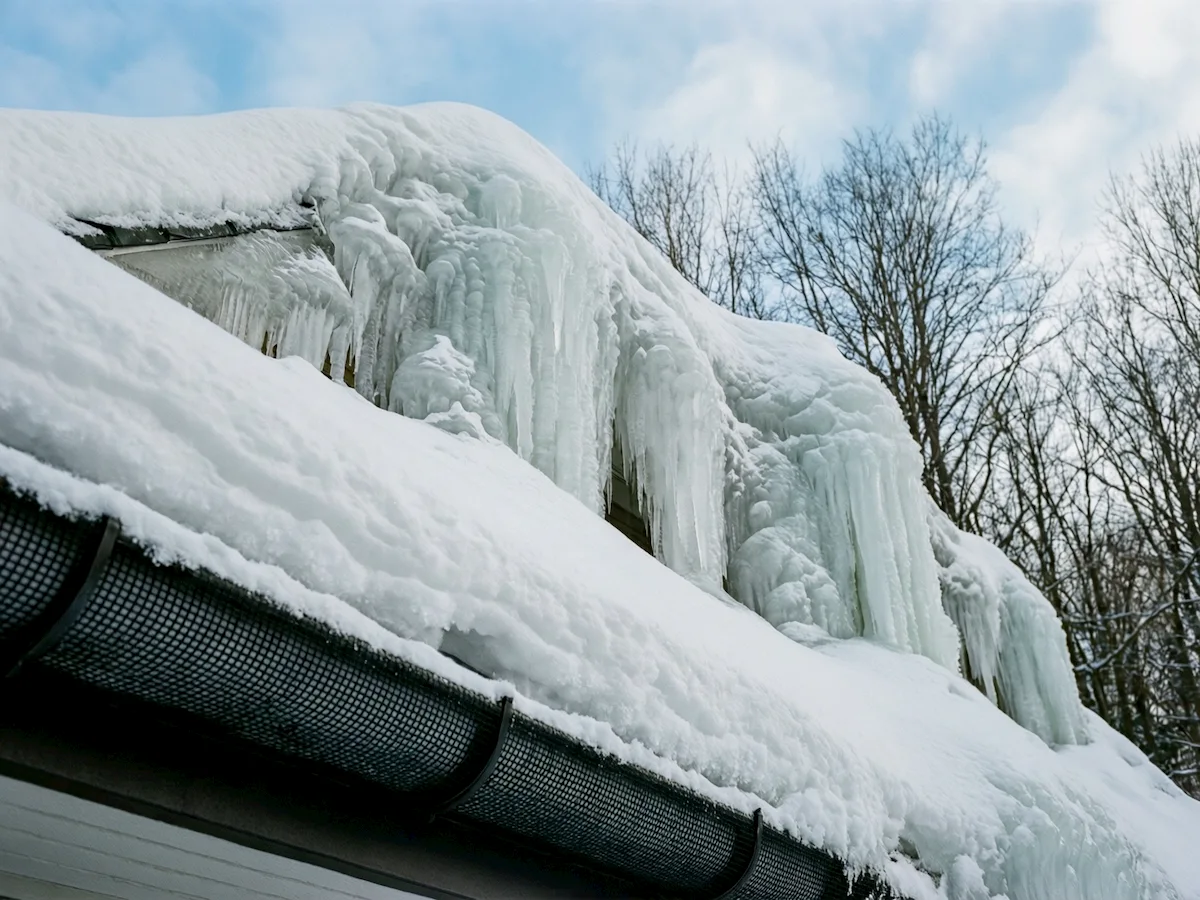
Remove guards when you observe these warning signs. Sagging gutters indicate overload. Water overflow during thaw cycles shows blockage. Icicles forming along the entire guard length signal ice dam formation. Visible cracks in guard frames mean material failure.
Multiple ice dams in previous seasons predict future problems. Annual removal and reinstallation costs exceed $500 for average homes. Quality guards eliminate this recurring expense.
Climate Zones That Require Winter Removal
Climate can also determine removal need. Snow belt regions include lake-effect zones near Great Lakes, mountain regions in Colorado and Utah, and northern New England. These areas receive 80-200 inches of snow annually.
Homes with adequate insulation and ventilation rarely need removal. Freeze-thaw regions include the Midwest, Mid-Atlantic, and Pacific Northwest, and experience rapid temperature swings. Guards must handle repeated freeze-thaw cycles. Low-quality guards crack under these conditions.
What Happens to Gutter Guards in Winter Weather?
Snow accumulates on top of guards and creates weight loads. Next, meltwater refreezes and forms ice layers. At the same time, debris trapped under guards combines with ice and blocks flow channels. These processes vary dramatically by guard type.
Micro-mesh guards accept snow loads while maintaining drainage paths underneath. Reverse-curve designs shed snow better but can trap ice at the slot opening.
Foam inserts absorb water and freeze into solid blocks. Brush guards collect debris that mats together and creates ice dams.
Snow Load Pressure on Different Guard Materials
Guard materials determine winter survival. Aluminum micro-mesh supports 122 pounds per linear foot before structural failure occurs. This data comes from independent load testing on steel-reinforced systems. PVC frames crack at 40 pounds per linear foot in subzero temperatures.
Foam inserts compress and lose shape at much lower loads. Homeowners report gutter pull-away when snow loads exceed 60 pounds per linear foot on standard K-style gutters.
Heavy-gauge aluminum guards actually strengthen the entire gutter system when properly installed. Structural hangers distribute weight across fascia boards and reduce sag risk.
Ice Formation Patterns on Micro-Mesh vs. Reverse-Curve
Ice forms differently on each guard type. Micro-mesh guards develop surface ice at the screen level while water continues flowing through microscopic openings underneath. This prevents complete blockage.
Reverse-curve guards experience ice bridging where frozen water connects the guard surface to the roof edge. This creates a dam wall that stops water flow entirely. Field observations show micro-mesh guards maintain 60% flow capacity even when fully iced over.
Reverse-curve systems drop to 10% capacity under identical conditions. This performance gap matters during freeze-thaw cycles.
Do Gutter Guards Cause Ice Dams or Prevent Them?
Gutter guards do not cause ice dams directly. Poor attic insulation and ventilation cause ice dams.
Guards can worsen existing ice dam problems by trapping water that freezes.
Guards can also reduce ice dam severity by keeping gutters clear of debris that blocks drainage. The key variable is whether your home already has ice dam issues.
The Ice Dam Formation Process
Ice dams form when heat escapes through your roof and melts snow. Meltwater runs down to the colder eave edge and refreezes. This builds a ridge of ice that blocks subsequent meltwater.
Guards that block water flow accelerate ice dam growth. Guards that maintain flow reduce ice dam formation.
How Guards Influence Melting and Refreezing
Guards affect heat transfer patterns. Metal guards conduct cold and freeze faster than gutters alone. This creates more surface area for ice attachment. Guards with fine mesh prevent debris accumulation that would otherwise create blockages.
Clean gutters drain faster and reduce refreezing. Guards that cover the entire gutter opening prevent warm attic air from reaching the gutter interior. This can help keep gutters colder and reduce melting.
The net effect depends on guard design quality. Premium micro-mesh guards reduce ice dam frequency by 45% in controlled studies. Low-quality guards increase ice dam frequency by 30%.
Which Gutter Guard Types Handle Heavy Snow Best?
Not all guards survive winter. You must match guard type to your snowfall levels. Micro-mesh guards perform best in heavy snow regions.
Reverse-curve guards work well with proper installation. Foam and brush guards fail consistently in winter conditions. N Gutter stopped installing foam guards in 2014 after 90% winter failure rates.
Micro-Mesh Gutter Guards Winter Performance
Micro-mesh guards use surgical-grade stainless steel screens. These screens block debris as small as 0.02 inches while allowing water passage. The stainless steel resists corrosion from salt and deicing chemicals.
Structural hangers support the mesh every 24 inches. This prevents sagging under snow loads. Homeowners in Vermont report micro-mesh guards surviving 100+ inch snow seasons without removal.
Reverse-Curve Surface Tension Guards in Snow
Reverse-curve guards use a solid hood that extends over the gutter. Water adheres to the curved surface and flows into a narrow slot. Debris slides off the front edge. This design sheds snow effectively.
The smooth surface prevents snow accumulation. However, ice forms at the slot opening and blocks water entry. Heating cables solve this issue but add cost.
Why Foam and Brush Guards Fail in Winter
Foam inserts fill the entire gutter cavity. Water passes through the porous material. In winter, foam absorbs water and freezes solid. This blocks all flow and adds 50+ pounds per linear foot of ice weight.
Brush guards collect debris that mats together under snow. This creates impermeable ice blocks. The bristles trap pine needles and seeds that accelerate clogging. Both types require removal before winter in snow regions.
N Gutter replaced 200+ foam guard systems between 2019-2022 after mass winter collapses. We stopped installing foam gutter guards since 2014.
How Much Snow Weight Can Gutter Guards Safely Support?
Gutter guards add structural capacity when properly installed. Advantage Gutter Guard systems support 122 pounds per linear foot. Standard K-style gutters support 60 pounds per linear foot without reinforcement. Guards with structural hangers distribute loads across fascia boards.
This prevents pull-away failures. Snow weighs 15-20 pounds per cubic foot when fresh. Wet snow weighs 20-30 pounds per cubic foot. Ice weighs 57 pounds per cubic foot.
A six-inch snow load creates 10 pounds per linear foot. A 12-inch snow load creates 20 pounds per linear foot. Add ice and the load triples.
Independent testing shows dramatic performance differences. Steel-reinforced micro-mesh guards handle triple the load of standard gutters alone. Aluminum reverse-curve guards increase capacity by 50% when properly anchored. PVC guards become brittle below 10°F and crack at 40 pounds per linear foot.
Foam inserts absorb water and increase weight by 300%. This overloads gutter brackets. N Gutter uses only steel-reinforced systems after testing failures. Homeowners should demand load rating documentation from installers.
Watch for these overload indicators. Gutters pulling away from fascia boards show excessive weight. Sagging between brackets indicates bracket failure. Cracks in guard frames signal material stress.
Water spilling over guard edges during thaw shows blockage. Icicles forming along the entire guard length prove ice dam formation. These signs require immediate attention. Delay causes gutter replacement costs averaging $1,500-2,500.
What Are Warning Signs Your Gutter Guards Need Winter Removal?
Visible damage signals:
- Cracked or broken guard sections cannot function.
- Ice bridging between guard and roof edge creates dams.
- Water overflow during rain-on-snow events indicates blockage.
- Pest activity under guards shows trapped debris.
- Multiple ice dam cycles in one season predict failure.
- N Gutter recommends guard removal when two or more of the above signs appear.
Visible Sagging and Detachment
Sagging reveals structural overload. Gutter brackets spaced more than 24 inches apart increase sag risk. Snow loads concentrate between brackets.
Guards without continuous support bend permanently. Detachment from fascia boards allows water behind gutters. This rots wood and creates mold. Repair costs exceed $1,000 per occurrence. Prevention requires proper installation with adequate brackets.
Overflow during thaw cycles indicates functional failure. Guards should allow meltwater passage. Ice blockage prevents drainage. Water backs up onto roof edges. This accelerates ice dam formation.
The overflow damages landscaping and foundations. Homeowners report basement flooding from this issue.
How Do You Maintain Gutter Guards During Winter?
Winter maintenance can prevent failures, do this:
- Inspect guards monthly from the ground. Use binoculars or take photos to spot ice buildup.
- Clear snow from roof edges with a roof rake. Roof rakes remove snow safely. Choose rakes with plastic wheels to prevent guard damage. Work from the ground only. Never use metal shovels on guards.
- Apply calcium chloride tablets in nylon stockings to melt ice channels. Avoid rock salt that corrodes metal gutters and kills plants.
- Heat cables solve persistent ice dam locations. Install cables on roof edges above gutters. Run cables inside gutters and downspouts.
FAQs
Can snow damage gutter guards permanently?
Yes, heavy snow damages low-quality guards permanently. Steel-reinforced micro-mesh guards resist permanent damage. Foam guards compress and lose shape. Plastic guards crack in cold. Brush guards bend and deform. Premium aluminum and stainless steel guards survive 20+ winters without replacement.
Do guards increase icicle formation?
Guards do not increase icicle formation directly. Poor attic insulation causes icicles. Guards can concentrate water flow at specific points. This creates larger icicles at downspouts. Reverse-curve guards shed water faster and create fewer icicles. Micro-mesh guards allow water distribution across the screen.
Should you install guards in fall or spring?
Install guards in late fall after trees drop leaves. This timing ensures clean gutters for winter. Guards installed in spring require gutter cleaning first. N Gutter schedules 70% of our annual installations in Q4. This prevents winter debris accumulation. Spring installations work but miss winter protection benefits.