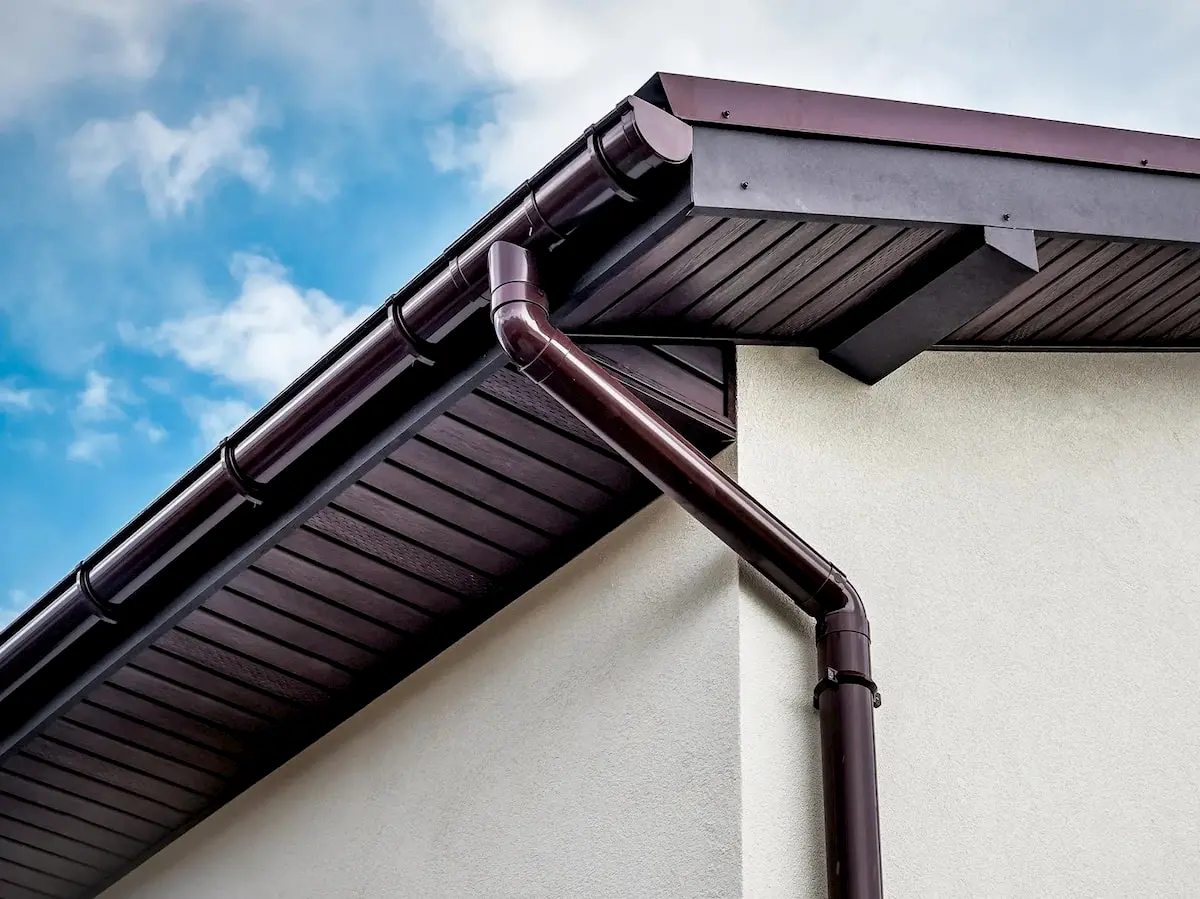
Choosing the right gutter color can transform how your house looks from the street. After installing gutters on hundreds of homes, We’ve seen firsthand how the right color choice can make a home look polished and well-maintained while the wrong one creates an awkward mismatch that draws attention for all the wrong reasons.
Why Gutter Color Matters More Than You Think?
Most homeowners spend weeks choosing paint colors for their siding but then rush the gutter decision in 10 minutes. This creates problems you’ll see every time you pull into your driveway.
Gutter color affects three main areas. First, it influences curb appeal and property value. Real estate agents know that homes with coordinated exteriors sell faster than those with mismatched gutters.
Color choice affects maintenance visibility. Dark gutters hide dirt and staining better than light ones. Third, certain colors can show sun damage or fading faster depending on your climate.
The gutters on your home cover roughly 100 to 200 linear feet depending on your house size. That’s a lot of visual real estate running along your roofline. When the color works, it adds definition and structure. When it clashes, it creates visual noise that makes your exterior feel unfinished.
The 6 Most Popular Gutter Colors We Install
At N Gutter, these six colors make up about 85% of our installations. Each one serves different architectural styles and homeowner preferences.
White Gutters: The Classic
White remains the single most requested gutter color we install. This isn’t surprising when you see how well white works with so many exterior combinations.
White gutters provide a crisp, clean transition between your roof and siding. They work particularly well with homes that have white or light-colored trim because they extend that trim line around your entire roofline. The visual effect creates continuity that makes your home feel larger and more cohesive.
Traditional homes with colonial, Cape Cod, or cottage architecture look excellent with white gutters. These styles typically feature white trim work, and matching gutters complete that classic aesthetic. Beach houses and coastal properties also favor white gutters because they complement the light, airy feel these homes aim for.
White gutters do show dirt more readily than darker options. You’ll notice streaks and staining sooner, which means more frequent cleaning to maintain that crisp appearance. In areas with heavy tree coverage, pine pollen, or dusty conditions, white gutters require attention every few months rather than twice yearly.
The material matters with white. Aluminum gutters with baked-on white enamel resist yellowing better than vinyl, which can turn grayish or develop a chalky appearance after years of sun exposure. We see this most often on south-facing elevations where UV exposure is highest.
Black Gutters: The Modern
Black gutters have surged in popularity over the past five years as modern farmhouse and contemporary designs became mainstream. Homeowners love how black gutters create bold definition along the roofline.
The contrast works particularly well on homes with white, light gray, or cream siding. Black gutters against light siding creates architectural lines that add visual interest. You see this effect strongest on homes with black-framed windows, which creates a coordinated look that feels intentional and designed.
Black gutters offer practical benefits beyond aesthetics. They hide dirt, leaf staining, and algae growth better than any other color. In my experience, black gutters need cleaning just as often to function properly, but they look cleaner between services. This matters if you’re someone who cares about appearance but doesn’t want constant maintenance.
One caution with black: dark colors absorb more heat, which causes slightly more expansion and contraction. This isn’t usually problematic with quality aluminum gutters, but it’s worth noting if you live somewhere with extreme temperature swings. The daily heating and cooling cycle puts more stress on fasteners and seams.
Brown Gutters: The Natural
Brown gutters work beautifully with earth-toned homes, wood siding, and brick exteriors. We install more brown gutters on homes with natural materials than any other type.
The appeal of brown comes from how it creates warmth while maintaining a low profile. Brown gutters don’t demand attention like black ones do. Instead, they blend into brick tones, complement wood grain, and harmonize with tan or beige siding. This makes them an excellent choice when you want functional gutters that don’t become a focal point.
Different brown shades serve different purposes. Light tan or sand brown works well with lighter brick and beige siding. Medium chocolate brown pairs with darker red brick and wood tones. Deep espresso brown functions almost like black, offering similar contrast on light-colored homes while maintaining a warmer feel.
Brown gutters handle dirt visibility well. They sit in the middle ground between white (shows everything) and black (hides everything). You’ll notice heavy debris or streaking, but normal accumulation stays relatively invisible.
For homes with autumn landscaping or wooded lots, brown gutters tie your house into the natural surroundings. They pick up on tree bark colors and fallen leaves, making the whole property feel more integrated.
Gray Gutters: Contemporary Elegance
Gray gutters have become increasingly popular as neutral color palettes dominate home design. Homeowners choose gray for its sophisticated, modern feel without the stark contrast of black.
Light gray gutters work well with white, off-white, or light gray siding. They provide subtle definition without creating sharp contrast lines. This approach suits people who want a refined look that doesn’t make dramatic statements. Think of it as the understated elegance option.
Charcoal or slate gray gutters function similarly to black but with slightly less intensity. They offer strong definition against light siding while appearing less harsh than pure black. Many homeowners who like the idea of black gutters but worry about them looking too severe find charcoal gray hits the perfect balance.
Gray gutters match beautifully with gray roofs, which have become common in recent years. When your roof, gutters, and trim share similar gray tones, you create a monochromatic scheme that feels cohesive and intentional. This works particularly well on contemporary and modern architectural styles.
The maintenance characteristics of gray gutters depend on the shade. Light gray shows dirt more than charcoal gray but less than white. Darker gray performs similarly to black, hiding most staining and discoloration between cleanings.
Copper and Bronze Gutters: Luxury
Copper gutters represent the luxury option in gutter colors. Real copper costs roughly 10 to 15 times more than aluminum, but it delivers an appearance nothing else can match.
Fresh copper gutters have a bright, warm metallic sheen. Over time, they develop a green-blue patina that many homeowners find beautiful. This patina forms as copper reacts with oxygen and moisture in the air. The process takes several years, and the final color depends on your local climate and air quality.
If you love the copper look but can’t justify the expense, copper-colored aluminum gutters offer a compromise. These use painted or powder-coated finishes to mimic copper’s appearance at a fraction of the cost. The finish won’t patina like real copper, but it maintains a consistent bronze-copper color that works well with brick, stone, and wood exteriors.
Bronze gutters fall in a similar category. True bronze costs nearly as much as copper, but bronze-colored aluminum gutters provide that deep, rich metallic tone without the premium price. Bronze works particularly well on homes with warm color schemes and natural materials.
Both copper and bronze gutters suit homes where architectural detail matters. Historic homes, craftsman-style houses, and upscale custom builds often feature these materials because they add character and perceived value.
Forest Green Gutters: Harmony
Green gutters remain less common than the previous five colors, but they work beautifully in specific situations. Homes surrounded by mature trees, properties in wooded settings, or houses with green roofing benefit most from green gutters.
Forest green or hunter green gutters blend with foliage and evergreen trees. This creates visual harmony between your home and its natural surroundings. The effect works best on homes with earth-toned siding, wood elements, or brick exteriors.
Some architectural styles particularly suit green gutters. Cabins, mountain homes, and rustic properties look natural with green accents. The color reinforces the connection to outdoor settings and natural materials.
Green also appears on homes with green roofs. If you have architectural shingles in green tones, matching your gutters creates continuity that makes sense visually. This prevents the awkward look of gutters that don’t relate to anything else on your exterior.
The shade matters significantly with green. Sage green offers a softer, more muted option that works with lighter color schemes. Deep forest green provides stronger contrast and definition. Avoid bright or lime greens unless your home has a very specific design that calls for them.
How Gutter Material Affects Color Options?
Not every gutter material accepts color the same way. Understanding these differences helps you make realistic choices about what’s available for your home.
Aluminum Gutters and Color Choices
Aluminum gutters offer the widest color selection of any gutter material. Manufacturers use baked-on enamel finishes or powder coating to create durable, fade-resistant colors. You can find aluminum gutters in virtually any color, though most contractors stock the popular options listed above.
The advantage of aluminum is that the color coating bonds permanently to the metal. This creates a finish that resists chipping, peeling, and fading far better than paint. Quality aluminum gutters maintain their color for 20 years or more when properly installed.
Aluminum gutters are also paintable if you want a custom color. You’ll need to clean, prime, and use exterior-grade paint designed for metal surfaces. The painted finish won’t be as durable as factory coating, but it gives you unlimited color options.
Seamless aluminum gutters, which we install at N Gutter, offer another advantage. Because there are no seams except at corners, the continuous color line looks cleaner and more refined than sectional gutters with visible joints every 10 feet.
Vinyl Gutters and Color Limitations
Vinyl gutters have fewer color options because the color is molded into the material itself rather than applied as a finish. Most vinyl gutters come in white, tan, brown, and occasionally gray.
The benefit of this approach is that scratches and dings don’t show as obviously since the color runs through the entire material. A white vinyl gutter that gets scratched still looks white underneath.
The drawback is that vinyl degrades under UV exposure. Over time, especially in sunny climates, vinyl gutters can fade, become brittle, and develop a chalky surface. White vinyl often turns grayish. Brown vinyl may lighten or develop an uneven, mottled appearance. This typically happens after 10 to 15 years, but it occurs faster in areas with intense sun exposure.
You can paint vinyl gutters, but the paint doesn’t adhere as well as it does to aluminum. The smooth, non-porous surface of vinyl requires special primers and paints. Even then, painted vinyl gutters need repainting more frequently than painted aluminum.
At N Gutter, we typically recommend aluminum over vinyl specifically because of these color durability issues. The slight cost difference pays off in appearance and longevity.
Should Gutters Match Your Roof, Siding, or Trim?
This question comes up on almost every estimate. The answer depends on what visual effect you want to create.
Matching gutters to your trim creates seamless integration. Your gutters become an extension of the trim work that already runs around windows, doors, and corners. This approach works best when you want gutters to disappear into your overall design rather than stand out as a separate element.
Most homes with white trim use white gutters for exactly this reason. The gutters continue the white line around your roofline, creating a frame that highlights your siding color. The same principle works with wood trim or colored trim, though white remains most common.
Matching gutters to your roof makes them part of your roofline rather than a border between roof and siding. This works well when your roof and siding contrast significantly. Black roof with light siding often uses black gutters for this reason. The gutters become the transition point where one color stops and another begins.
The risk with matching your roof is that roof colors often differ substantially from siding colors. If you have a dark brown roof and white siding, dark brown gutters might create too much contrast and draw attention to the roofline in a way that feels heavy or unbalanced.
Matching gutters to your siding makes them virtually disappear. They blend into your exterior walls and become less noticeable. This approach works if you want minimal visual interruption between your roof and walls. Homes with earth-toned siding often use this strategy with tan or brown gutters.
The guideline I give homeowners: match your trim if you have prominent trim work, match your roof if the siding and roof already contrast strongly, and match your siding if you want gutters to be invisible. There’s no universally correct answer, just different visual effects.
Some homes use contrasting gutters intentionally. Black gutters on a white colonial home with white trim create architectural definition that adds character. This works best on newer or recently updated homes where the deliberate contrast fits a more modern aesthetic.
Climate Factors That Affect Gutter Color
Your local weather patterns should influence your color choice more than most people realize.
Hot, sunny climates cause more fading on all gutter colors. UV radiation breaks down color pigments over time. Dark colors absorb more heat, which accelerates this breakdown.
If you live in the Southwest or other areas with intense, year-round sun, expect faster fading regardless of color. Lighter colors show this fading more obviously as they develop a chalky, washed-out appearance.
Quality matters in these climates. Aluminum gutters with premium UV-resistant coatings perform better than economy options. Vinyl gutters struggle most in hot climates because the material itself becomes brittle along with color degradation.
Cold climates with snow and ice present different challenges. Repeated freeze-thaw cycles don’t affect color directly, but they stress gutter seams and fasteners. This matters because maintenance often requires matching touch-up paint. Aluminum maintains its color integrity better than vinyl in freezing temperatures.
Humid, rainy climates accelerate organic growth on gutter surfaces. Algae, mildew, and mold grow fastest in warm, wet conditions. This shows up as dark streaking on white gutters and green-black discoloration on darker gutters. If you live in a humid region, darker gutter colors hide this better, though cleaning frequency should stay the same to maintain water flow.
Coastal areas introduce salt air into the equation. Salt causes corrosion on some metals, though aluminum resists this well. More relevant to color, salt residue can create white deposits and discoloration. This affects darker colors more visibly than lighter ones because the white salt shows against dark backgrounds.
Areas with heavy tree coverage deal with tannin staining from leaves and organic debris. This creates brown or rust-colored streaks on gutters. White gutters show these stains most prominently, while brown and black gutters hide them better. We see this constantly in neighborhoods with oak trees, which produce particularly noticeable tannin stains.
Common Gutter Color Mistakes We See at N Gutter
After thousands of installations, certain mistakes come up repeatedly. Avoiding these will save you from regret later.
The first mistake is choosing gutters based solely on what’s cheapest or most available. Some contractors only stock two or three colors and will try to talk you into whatever they have. This often leaves homeowners with gutters that don’t suit their home. Spending slightly more for the right color pays off every time you look at your house.
Second, people forget about downspouts. Your downspouts cover large vertical sections of your walls. If you choose contrasting gutters without thinking about where downspouts run, you might end up with black downspouts running down the middle of a white wall. Plan the whole system, not just the gutters along your roofline.
Third, homeowners sometimes pick trendy colors that might not age well. Bright or unusual colors can look exciting initially but may appear dated in five years. If you’re planning to sell within a decade, stick with neutral colors that appeal to broad tastes.
Fourth, matching gutters exactly to vinyl siding almost never works. Vinyl siding fades faster than aluminum gutters. Even if they match perfectly at installation, within three years the siding will have lightened while the gutters maintain their original color. This creates a mismatched look. Go slightly darker than your siding to account for future fading.
Fifth, people ignore architectural style. Modern colors like black look out of place on traditional colonials. Earth tones feel wrong on contemporary designs. Respect your home’s style when choosing colors.
FAQs
What is the most popular gutter color?
White remains the most popular gutter color, accounting for roughly 40 percent of installations. White gutters work with almost any home exterior and create a clean, classic look that never goes out of style.
Should my gutters be darker or lighter than my roof?
This depends on your design goal. Darker gutters that match your roof create strong definition along your roofline. Lighter gutters that match your trim or siding offer a softer, more integrated look. Neither option is inherently better.
Do dark gutters fade faster than light gutters?
Dark colors absorb more heat and UV radiation, which can accelerate fading. Quality aluminum gutters resist fading regardless of color, but budget materials show more degradation on dark colors. Premium powder-coated finishes maintain color integrity for 20-plus years.
Can I paint my gutters a different color?
Yes, aluminum gutters can be painted. Clean them thoroughly, apply metal primer, and use exterior-grade acrylic latex paint. Painted finishes won’t last as long as factory coatings but give you custom color options. Vinyl gutters can also be painted but require special vinyl-specific primers.
What color gutters work best with red brick?
Brown, copper, bronze, black, and gray all work well with red brick. Brown complements the warm tones in brick. Black or charcoal gray provides modern contrast. Copper or bronze picks up on the rich, earthy quality of brick. White can work too if you have white trim, though it creates more contrast.
Do HOAs restrict gutter colors?
Many homeowners associations have guidelines about exterior colors, including gutters. Check your HOA rules before installation. Most allow neutral colors like white, brown, and gray, but some prohibit black or other bold choices.