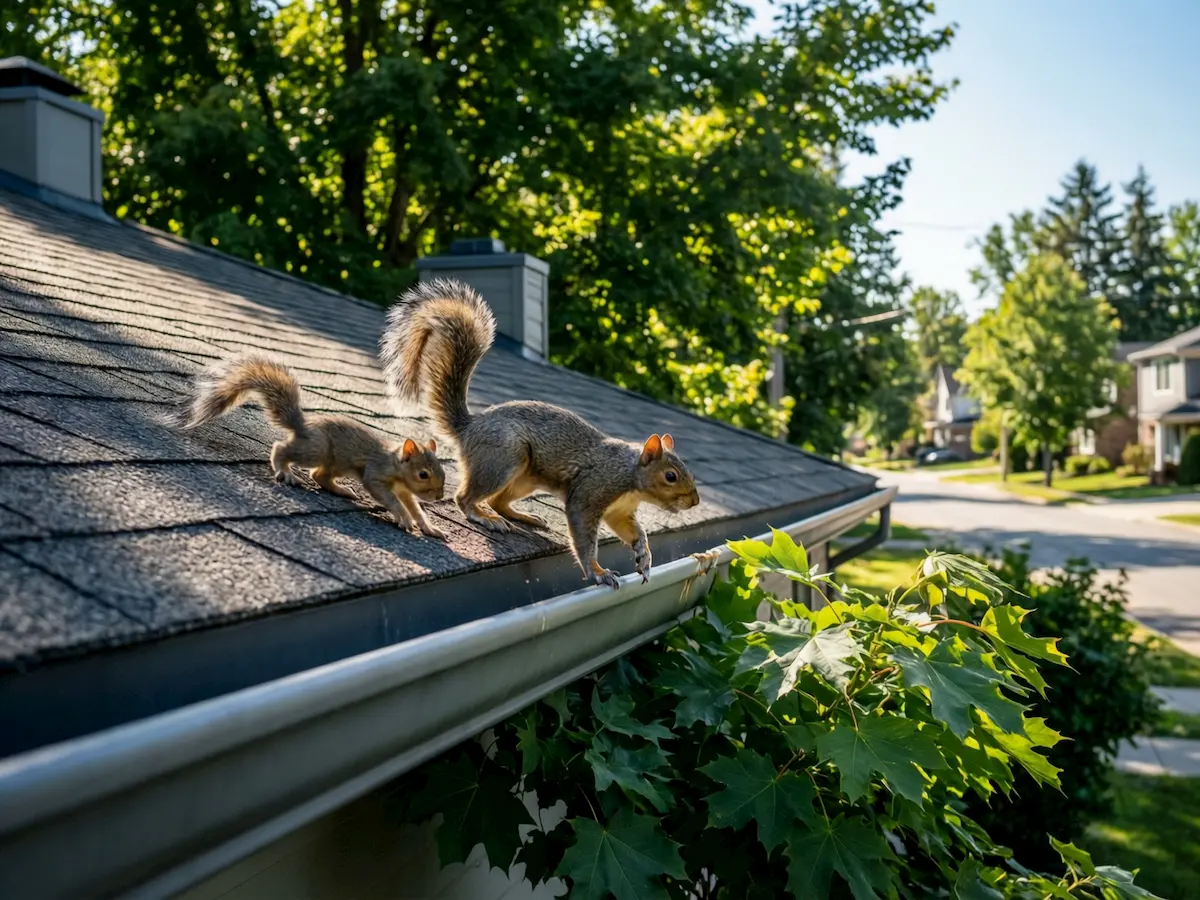
Squirrels building nests in your gutters can transform a minor annoyance into a serious home maintenance crisis. After installing gutters on thousands of properties across Philadelphia and nearby, we’ve seen how these playful and persistent rodents can chew through aluminum, clog downspouts with nesting materials, and might cause water damage.
This guide draws from real-world removal projects to help you address squirrel infestations before they destroy your drainage system.
Why Squirrels Choose Your Gutters?
Squirrels select gutters for three specific reasons:
- Accumulated leaves and twigs provide ready-made nesting materials.
- The enclosed space protects them from predators like hawks and owls.
- Gutters offer easy roof access for entering attics where conditions are even better for raising young.
These animals mate twice yearly. The first breeding season runs from December through February, producing litters between February and April.
The second occurs from late June through August, with babies arriving in August or September.
Female squirrels deliver two to six babies per litter, which stay in the nest for 10 to 12 weeks before venturing out.
During winter months, squirrels seek warm locations. Your home’s heat escaping through the roof makes gutters and attics attractive shelter.
In spring and summer, females need secure spots to raise their young away from ground predators.
Signs Squirrels Have Invaded Your Gutters
Check for these indicators before climbing your ladder.
Physical Evidence
Chew marks appear along gutter edges, downspouts, and fascia boards. Squirrel teeth grow six inches annually, requiring constant gnawing to maintain proper length. This biological necessity means they’ll chew anything accessible, including your gutter materials.
Look for compact nests made from leaves, twigs, insulation, and shredded materials. Unlike random leaf buildup, these nests appear intentionally constructed and positioned in protected gutter sections.
Audible Clues
Scratching sounds during early morning or evening hours signal active squirrels. You’ll hear scurrying, gnawing, or chattering as they move through the system. Baby squirrels make high-pitched chirping noises when hungry or distressed.
Behavioral Patterns
Watch for repeated trips between nearby trees and your roofline. Squirrels traveling the same path multiple times per hour are likely shuttling nesting materials or food. Aggressive territorial behavior near specific gutter sections indicates an established nest.
Damage Indicators
Overflowing gutters during rainfall show blockages from nests or debris. Water staining on siding below gutter lines points to overflow issues. Sagging gutter sections result from added nest weight combined with trapped water.
How to Get Squirrels out of Your Gutters?
1. Natural Scent Deterrents
Scent-based repellents work by overwhelming squirrels’ sensitive noses. These methods are non-harmful and easy to apply.
Peppermint Oil Application
Mix 10 drops of peppermint essential oil with one cup of water in a spray bottle. Add one tablespoon of white vinegar to help the solution adhere. Spray directly onto gutter edges, fascia boards, and downspout openings. Reapply after rain or every five to seven days.
The strong menthol scent irritates squirrel nasal passages without causing harm. Focus spray on areas showing chew marks or near nest locations. Avoid oversaturating painted surfaces, as some oils may affect finishes.
Predator Urine
Coyote or fox urine signals danger to squirrels. Purchase bottled predator urine from farm supply stores or hunting retailers. Soak cotton rags or balls in the urine, then place them in mesh bags. Position these bags near downspout openings and under landscape mulch around your home’s perimeter.
Replace urine-soaked materials every 10 to 14 days or after heavy rain. This method works best when combined with other deterrents since squirrels may acclimate to the scent over time.
Spicy Deterrent Mix
Combine two tablespoons of cayenne pepper, two tablespoons of crushed red pepper flakes, and one tablespoon of garlic powder in a quart of water. Let this mixture sit overnight, then strain through cheesecloth. Add one tablespoon of dish soap and transfer to a spray bottle.
Apply this solution to gutter surfaces, avoiding direct contact with plants below. The capsaicin in peppers causes temporary discomfort when squirrels touch treated surfaces with paws or mouths. Reapply weekly and after rain.
2. Physical Barriers and Entry Point Blocking
Preventing gutter access stops squirrels from establishing nests.
Tree Branch Management
Trim tree branches to maintain at least 10 to 15 feet of clearance from your roofline. Squirrels jump eight feet horizontally and can leap from overhanging branches directly onto your roof. Use proper pruning techniques to avoid tree damage while removing access routes.
Focus on branches level with or above your gutters. Even branches below the roofline provide launching points for determined squirrels. Schedule tree trimming twice yearly in spring and fall before peak nesting seasons.
Wire Mesh Installation
Cut hardware cloth or galvanized steel mesh into sections sized to cover downspout openings. The mesh should have quarter-inch or smaller openings to prevent squirrel entry. Cut pieces three feet long and wide enough to wrap partway around the downspout.
Position mesh inside the gutter at the downspout entrance. Secure with stainless steel screws through the gutter sides into backing blocks. Water flows through the mesh while squirrels cannot climb up through the downspout from ground level.
For complete gutter protection, install wire mesh across the entire top opening. Cut mesh strips matching your gutter run length. Secure with metal screws every 18 to 24 inches. Slope the mesh slightly to allow leaves to slide off during cleaning.
Downspout Ground Protection
Cover ground-level downspout exits with wire mesh cages. Build simple frames from half-inch hardware cloth formed into cylinders. These cylinders should measure six inches in diameter and extend 12 inches up the downspout. Secure with metal hose clamps or wire ties.
This prevents squirrels from entering gutters through the bottom access point. Water still drains freely through the mesh while blocking animal entry.
3. Gutter Guards
After installing hundreds of gutter guard systems, I can confirm they’re your best long-term squirrel defense.
Micro-Mesh Systems
Stainless steel micro-mesh guards feature holes smaller than one millimeter. This tiny mesh size blocks squirrels while allowing water to flow through. The steel construction resists chewing better than aluminum or plastic alternatives.
Professional installation ensures proper fit and prevents gap formation. Guards mount under shingles and attach to gutter fronts, creating a sealed system. Squirrels cannot lift or chew through properly installed micro-mesh guards.
Solid Surface Guards
These guards use aluminum or steel panels with water adhesion technology. Water flows over the curved surface and into the gutter while leaves and debris slide off. Squirrels find no purchase points on the smooth surface.
The sealed design prevents nest building entirely. No gaps exist for squirrels to access gutter interiors. Clean these guards twice yearly by hosing debris from surfaces.
Maintenance Programs
Gutter guards reduce but don’t eliminate maintenance needs. Schedule professional inspections twice yearly. Technicians check for guard damage, remove accumulated debris, and verify proper water flow. Regular gutter maintenance extends system life and maintains squirrel protection.
4. Removal of Existing Nests
If squirrels already nest in your gutters, removal requires careful planning.
Safety Preparation
Never attempt nest removal during baby season (February through April and August through September). Mother squirrels become extremely aggressive defending young. Separating mothers from babies creates orphaned animals that cannot survive alone.
Wear thick leather gloves, safety glasses, and a dust mask rated N95 or higher. Long sleeves and pants protect from scratches and bites. Position your ladder on stable ground with a helper steadying the base.
Debris Clearance First
Start from the downspout and work toward the nest location. Remove surrounding leaves, twigs, and loose debris by hand. Place materials in a bucket attached to your ladder. This prevents pushing debris further into the gutter system.
Use a plastic gutter scoop for compacted materials. Metal scoops can scratch gutter interiors, creating weak points for future damage.
Nest Extraction
Once surrounding debris clears, carefully lift the nest out. Place it immediately into a heavy-duty garbage bag to contain materials and prevent scattering. Check for baby squirrels before disposal. If you find young animals, contact a licensed wildlife rehabilitator immediately.
Remove all nest remnants. Even small material amounts will attract squirrels back to rebuild. Check for chewed holes or damage requiring gutter repair before proceeding.
System Flushing
After nest removal, flush gutters thoroughly with a garden hose. Start at the end opposite the downspout, spraying water toward the drainage point. This clears residual debris and verifies proper water flow through the system.
Watch water exit from downspouts. Slow drainage indicates remaining blockages needing additional clearing.
5. Habitat Modification
Making your property less attractive reduces squirrel interest.
Food Source Elimination
Remove or relocate bird feeders at least 30 feet from your home. Squirrels raid feeders for seeds, then nest nearby. Use squirrel-proof feeder designs with weight-activated perches that close when heavier animals climb on.
Clean outdoor cooking areas immediately after use. Store garbage in sealed metal bins. Fallen fruit from trees attracts squirrels, so collect and dispose of it regularly. Plant vegetable gardens far from structures to avoid creating attractants near your gutters.
Yard Sanitation
Keep your lawn and landscaping well-maintained. Tall grass and overgrown shrubs provide hiding spots and travel corridors. Trim shrubs back from structures, maintaining at least three feet of clearance.
Remove wood piles, brush piles, and debris stacks. These create shelter and nesting alternatives that keep squirrel populations high around your property. Store firewood at least 20 feet from structures and elevate it six inches off the ground.
Alternative Shelter Provision
Install squirrel nest boxes in trees away from your home. Place boxes 15 to 20 feet high on tree trunks, positioning them on the side away from prevailing winds. Properly positioned nest boxes give squirrels attractive alternatives to your gutters.
Mount three to four boxes around your property to accommodate multiple families. This strategy redirects nesting behavior away from structures while maintaining healthy squirrel populations for ecosystem balance.
6. Live Trapping
Live trapping should be your last resort after other methods fail.
Legal Requirements
Check local regulations before trapping. Many states prohibit squirrel relocation because relocated animals die at rates exceeding 80 percent due to territorial conflicts and unfamiliar food sources. Some regions require permits for trapping, even on private property.
Contact your state wildlife agency for specific rules. Pennsylvania, for example, allows homeowners to trap squirrels on their property but prohibits relocation more than 100 yards away.
Trap Selection and Placement
Use live cage traps measuring at least 15 inches long. Smaller traps cause injury and stress. Position traps on flat roof sections near gutter access points. Secure traps to prevent tipping or falling.
Bait traps with peanut butter, sunflower seeds, or whole peanuts in shells. Check traps every four to six hours during daylight. Never leave traps set overnight, as trapped squirrels suffer extreme stress and exposure.
When to Call Professionals
Contact licensed wildlife control specialists if you’ve trapped multiple squirrels without solving the problem. Professionals have legal authority to relocate animals and can identify entry points you might miss. They use one-way exclusion doors that allow squirrels to exit but prevent reentry.
Professional services cost $200 to $600 for initial removal plus $100 to $300 for entry point sealing. This investment prevents recurring infestations and protects your gutter system from further damage.
7. Post-Removal Repairs and Prevention
After removing squirrels, address damage and prevent return.
Gutter System Inspection
Examine all gutter sections for holes, cracks, and separated seams. Check fascia boards for rot or water damage. Inspect soffit vents for chew damage that might allow attic access. Document all damage with photos for insurance claims if necessary.
Test gutter pitch by pouring water at various points. Water should flow toward downspouts without pooling. Sagging sections need rehanger installation or replacement.
Immediate Repairs
Seal small holes with waterproof gutter sealant. Holes larger than two inches require patch installation. Cut patches from matching gutter material, extending four inches beyond damage in all directions. Apply sealant around edges and secure with rivets or screws.
Replace damaged gutter sections when repairs aren’t feasible. Seamless gutter installation eliminates seams where squirrels typically gain access. This reduces future vulnerability.
Fascia Board Treatment
Replace water-damaged fascia boards before reinstalling gutters. Rotted wood provides easy entry for squirrels to chew through. Paint or seal new boards with exterior-grade primer and paint to resist moisture.
Install metal flashing between fascia and gutter backs. This creates a chew-resistant barrier while preventing water infiltration behind gutters.
Ongoing Monitoring
Schedule gutter inspections quarterly during the first year after squirrel removal. Look for new chew marks, accumulating debris, or signs of returning wildlife. Early detection prevents major infestations from re-establishing.
Join a professional gutter maintenance program for regular cleaning and inspection. Technicians spot problems early while keeping systems clean and unattractive to nesting animals.
Damage Squirrels Cause to Gutter Systems
Understanding potential damage helps you prioritize removal efforts.
Structural Compromises
Squirrels gnaw holes through aluminum, vinyl, and even thin steel gutters. I’ve replaced entire gutter runs where squirrels chewed through seams and corners, creating entry points for water infiltration. These holes allow rainwater to bypass the drainage system, saturating fascia boards and causing rot.
Nests add significant weight. A mature nest filled with materials and multiple squirrels can weigh 15 to 20 pounds. This weight stresses gutter hangers, causing sections to pull away from fascia or sag below proper pitch. Once pitch changes, water pools instead of flowing toward downspouts.
Water Management Failures
Blocked downspouts force water to overflow gutter edges. During heavy rain, this overflow dumps hundreds of gallons directly beside your foundation. Over months, this water saturates soil, creating hydrostatic pressure against basement walls. Foundation cracks, basement flooding, and structural settling follow.
Water backing up under roof shingles causes wood rot in roof decking and fascia. Mold growth develops in damp wood, spreading into attic spaces. These repairs cost $3,000 to $15,000 depending on rot extent.
Health Hazards
Squirrel droppings contain bacteria causing salmonellosis and leptospirosis. Dried feces become airborne when disturbed, creating respiratory risks. Direct contact during nest removal without protective equipment exposes you to these pathogens.
Dead squirrels trapped in gutters or downspouts attract flies, beetles, and other insects. The decomposition smell permeates through soffit vents into living spaces. Professional removal and sanitization become necessary.
Understanding Squirrel Behavior Patterns
Knowing when squirrels are most active helps you time preventive measures.
Daily Activity Cycles
Squirrels are diurnal, meaning they’re most active during daylight hours. Peak activity occurs within two hours after sunrise and two hours before sunset. They rest during midday heat and through the night.
This schedule means you’ll hear gutter activity primarily during early morning and late afternoon. Time your observation and inspection work during these windows for maximum effectiveness.
Seasonal Movement Patterns
Winter activity decreases but doesn’t stop. Squirrels don’t hibernate. They stay in nests during extreme cold and emerge on warmer days to forage. This is when they’re most likely to seek warm shelter in attics accessed through gutters.
Spring brings increased activity as squirrels build nests for first litters. Summer sees peak population after both litters are born. Fall activity intensifies as squirrels cache food for winter.
Understanding these patterns helps you schedule preventive work. Install barriers and deterrents in late fall before winter nest-seeking begins and in early spring before breeding season starts.
When to Call Professional Help?
Some situations require expertise beyond DIY solutions.
Complex Infestations
If you’ve removed squirrels multiple times without success, the problem extends beyond your gutters. Squirrels may have established attic nests with multiple entry points. Professionals use thermal imaging cameras to locate hidden nests and entry routes.
Large colonies with six or more animals require coordinated removal. Individual trapping becomes ineffective as breeding outpaces removal efforts. Professional teams use multiple exclusion methods simultaneously.
Structural Damage
Extensive chew damage to fascia, soffit, or roof components needs professional assessment. Contractors can evaluate whether repairs require simple patches or full board replacement. They coordinate wildlife removal before structural work begins.
Water damage from prolonged gutter failure often extends into wall cavities and insulation. Professionals use moisture meters and inspection cameras to map damage extent before creating repair plans.
Safety Concerns
Working on roofs and ladders presents fall risks. If your roof pitch exceeds 6/12 or your home stands taller than two stories, hire professionals. They have proper safety equipment including harnesses, anchors, and specialized ladders.
Aggressive squirrel behavior indicates defensive mothers protecting young. Professionals have training and equipment to handle aggressive animals safely while minimizing stress to the animals.
Preventing Future Squirrel Problems
Long-term prevention beats repeated removal efforts.
Quarterly Inspections
Walk your property’s perimeter every three months. Look for new tree growth approaching the roofline. Check gutter guards for damage or displacement. Examine ground-level downspout exits for digging or chew marks.
These quick inspections take 20 to 30 minutes but catch problems before they escalate. Mark inspection dates on your calendar to maintain the schedule.
Seasonal Maintenance
Clean gutters twice yearly minimum. Fall cleaning removes leaves before winter. Spring cleaning clears winter debris before storm season. Regular gutter cleaning prevents debris buildup that attracts nesting squirrels.
Trim trees annually before spring breeding season. This maintains clearance and removes potential access routes before squirrels need nesting sites.
Documentation and Learning
Photograph your gutter system and surrounding areas annually. These photos help you track changes over time and identify problem areas developing slowly. Note when you see increased squirrel activity or new chew marks.
Keep records of repairs, deterrent applications, and professional service dates. This documentation helps identify what works for your specific situation and shows patterns you might otherwise miss.
FAQs
Can squirrels damage downspouts?
Yes, squirrels chew through aluminum and vinyl downspouts regularly. They also climb up through downspouts from ground level to access gutters above. Their teeth grow continuously and require constant gnawing, making any accessible material a target. Installing wire mesh at both ends of downspouts prevents this damage.
How do you tell if squirrels are in your attic or just in your gutters?
Listen for activity location. Gutter squirrels make noise along the roofline edges. Attic squirrels create sounds from above ceiling level. Check your attic for droppings, chewed insulation, or disturbed areas. Gutter problems show scratches and chew marks on exterior surfaces. Attic infestations include entry holes through soffit or roof vents.
Will gutter guards keep all pests out?
Professional micro-mesh guards block squirrels, birds, and larger insects from entering gutters. Smaller insects may still access the system through tiny gaps. Properly installed guards with sealed edges provide the best protection.
Do ultrasonic repellents work on squirrels?
Research shows mixed results for ultrasonic devices. Squirrels may avoid areas initially but often acclimate to the sound within two to three weeks. These devices work better as temporary solutions combined with other deterrents rather than standalone prevention methods.
How much does professional squirrel removal cost?
Basic removal services range from $200 to $600 depending on infestation size and location accessibility. Entry point sealing adds $100 to $300. Damage repair costs vary widely based on extent. A comprehensive service including removal, exclusion, and basic repairs typically runs $500 to $1,200.
Can baby squirrels survive without their mother?
Newborn squirrels cannot survive more than a few hours without maternal care. They depend completely on their mother for food, warmth, and protection for their first eight weeks. If you find baby squirrels, contact a licensed wildlife rehabilitator immediately. Never attempt to raise them yourself, as specific diets and care techniques are required.
Bottom Line
Squirrels in gutters create serious problems but respond well to systematic removal and prevention. Start with non-invasive deterrents like scent barriers and entry point blocking. Install professional gutter guards for long-term protection. Remove nests carefully outside breeding seasons, and always repair resulting damage promptly.
If DIY methods don’t solve your squirrel problem within a few weeks, contact professionals. They have the tools, training, and legal authority to handle complex situations safely and effectively.