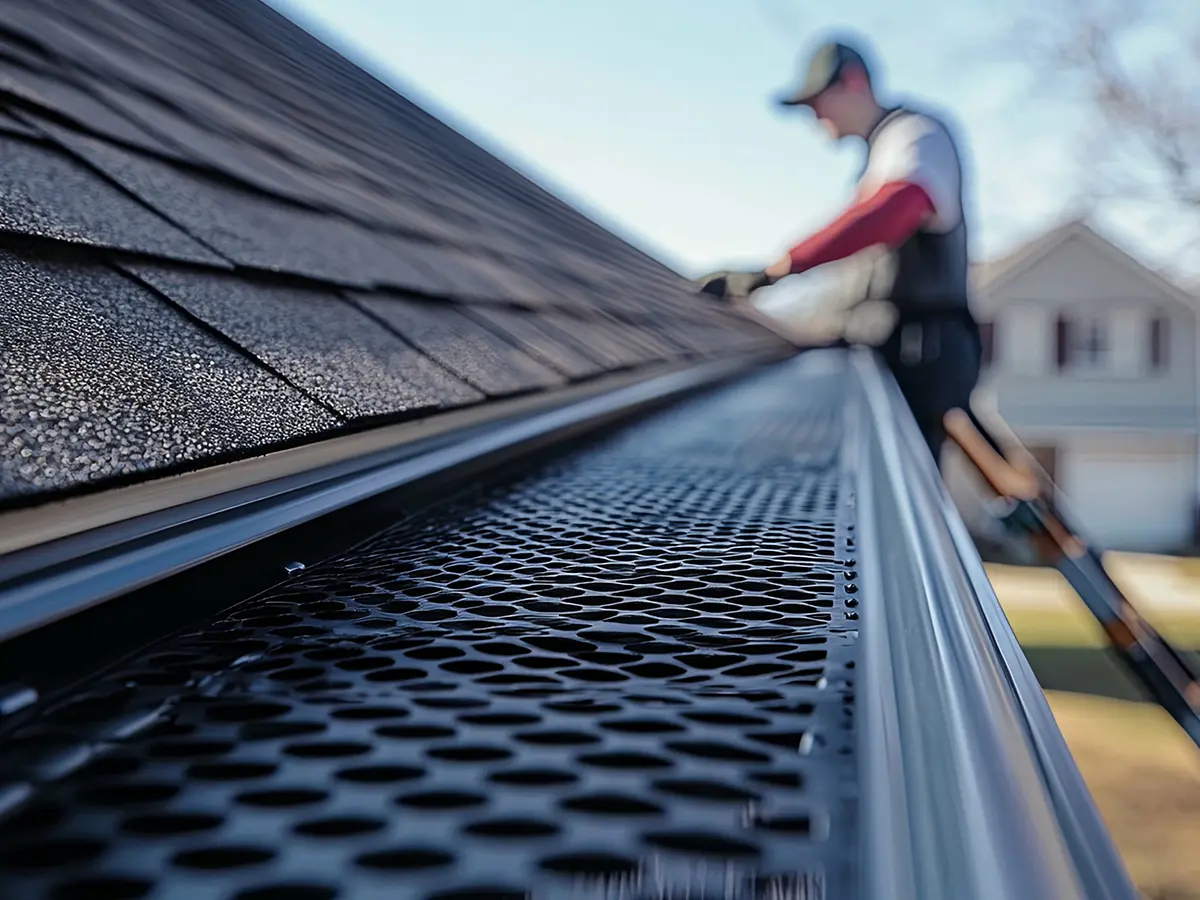
Gutter guards promise freedom from ladder work and clogged drainage. Yet thousands of homeowners discover their investment creates new problems instead of solving old ones.
Poor installation causes water overflow, voids roof warranties, and turns a simple upgrade into costly repairs. This guide shows you exactly what to avoid and how to install gutter guards correctly.
What Are Gutter Guards?
Gutter guards are protective covers that sit atop your gutter system. They block leaves, pine needles, and debris while allowing water to flow through. LeafFilter, MasterShield, and similar brands use micromesh technology.
Foam inserts and brush guards offer DIY alternatives. Installation determines success or failure.
A perfectly designed guard fails if you attach it wrong, choose incompatible materials, or ignore underlying gutter problems. This matters because fixing botched installations often costs more than the original project.
10 Critical Gutter Guard Installation Mistakes to Avoid
These errors appear in countless DIY projects and even some professional jobs. Avoid them to protect your home and investment.
1. Choosing the Wrong Gutter Guard Type for Your Climate and Debris
Each guard type serves different conditions. Micromesh excels in heavy tree coverage and blocks pine needles effectively. Screen guards work for large leaves but let small debris pass.
Foam inserts suit dry climates but rot quickly in wet areas. Brush guards attract debris like Velcro and require constant cleaning. Reverse-curve systems handle heavy rain but create visibility issues.
Your climate dictates material choice. Intense sun degrades plastic and foam. Temperature swings warp vinyl. High rainfall demands premium water handling.
Steel micromesh outlasts other materials by decades. Research shows micromesh systems last 20-30 years while foam fails in 2-4 years. Choose based on your specific debris type and weather patterns, not packaging claims.
2. Skipping Pre-Installation Gutter Inspection and Repairs
You cannot fix gutters by covering them with guards. You must inspect first. Check for sagging sections that dip below the roofline. Look for loose or missing hangers spaced more than 36 inches apart.
Examine fascia boards for soft spots or rot. Test for leaking seams at corners and end caps. Verify proper pitch.
Address all issues before adding guards. Guards add weight to your system. Weak gutters collapse under this extra load.
Repairs become harder after installation because you must remove guards to access problems. A thorough inspection takes one hour but saves thousands in future repairs.
3. Ignoring Proper Gutter Pitch and Slope Requirements
Gutters need correct slope to drain water. Industry standards require 1/4 inch of drop per 10 feet of gutter length. This equals 1/16 inch per foot minimum. Use a level and tape measure to verify.
Place the level in the gutter, center the bubble, then measure vertical distance to gutter bottom. You should see approximately 1/4 inch drop per 10 feet.
Incorrect pitch causes water to pool. Pooling water overflows during heavy rain. It adds weight that sags gutters further. It creates breeding grounds for mosquitoes.
Many homeowners install guards over improperly pitched gutters. This locks in the problem. Adjust hangers to correct pitch before installing any guard system.
4. Installing Gutter Guards Under Roof Shingles
This mistake destroys roofs. Never slide guards under shingles. Lifting shingles breaks the adhesive seal. This disrupts the overlapping water barrier designed to shed rain away from your roof deck.
Water enters and causes rot. Wind can catch lifted edges and peel back entire sections. Roofing manufacturers void warranties when you disturb shingles.
Quality systems attach directly to gutters without shingle contact. If instructions require shingle insertion, choose a different product. The risk far exceeds any potential benefit.
Gutter guards should rest on gutter edges or clip to front lips. Keep them independent of your roofing system.
5. Using Incorrect Fasteners or Overtightening During Installation
Fastener choice affects longevity. Use stainless steel or corrosion-resistant screws appropriate for your gutter material. Aluminum gutters need aluminum-compatible fasteners.
Steel gutters require coated screws to prevent galvanic corrosion. Generic screws rust and fail within two years.
Overtightening warps gutter edges. It cracks vinyl components. It strips screw holes. Undertightening lets guards shift and rattle in wind. Wind can dislodge poorly fastened sections.
Manufacturer specifications list exact torque requirements. Follow them precisely. Hand-tighten plus one quarter turn provides a good rule of thumb for most systems.
6. Neglecting Downspout Sizing and Compatibility Checks
Downspouts must match gutter capacity. Standard 5-inch gutters need minimum 2×3 inch downspouts. Undersized downspouts restrict water flow.
They cause backup during storms. This backup makes water overflow guards regardless of their quality.
Check downspout outlets direct water 4-6 feet from your foundation. Verify extensions or splash blocks are in place. Test flow by running a hose into gutters.
Water should exit immediately without hesitation. If guards include outlet screens, ensure they do not create additional restrictions. Clogged downspouts defeat the entire system purpose.
7. Forgetting Sealant Application at Seams and Corner Miters
Seams and corners leak without proper sealant. Apply gutter-grade silicone or polyurethane sealant rated for outdoor exposure. Focus on where guard panels meet, inside and outside mitered corners, and end cap terminations. Joints represent common failure points.
Sealant prevents water infiltration behind the system. It stops leaks that damage fascia and soffits. It blocks pest entry points. Some manufacturers specify exact sealant types.
Using unapproved products voids warranties. Apply sealant during installation, not as an afterthought. This takes five minutes per joint but prevents years of problems.
8. Installing Gutter Guards in Extreme Weather Conditions
Temperature affects installation quality. Install guards when temperatures range between 40°F and 85°F. Cold weather makes materials brittle. It prevents sealant from curing properly.
Hot weather makes components too flexible. It causes sealant to skin over before you position pieces properly.
Rain creates dangerous ladder conditions. Wind catches loose panels and causes injury. Ice forms on surfaces. Check weather forecasts for 48-hour dry windows.
Late spring and early fall offer ideal conditions. Gutters stay relatively clear. Temperatures remain moderate. Schedule projects during these seasons for best results.
9. Overlapping Panels Incorrectly Against Water Flow
Multi-panel systems require proper overlap. Overlap sections in the direction of water flow. This prevents gaps where debris enters. Picture water flowing left to right.
Left panel should overlap on top of right panel. This creates a shingle effect that sheds water.
Incorrect overlap creates seams facing uphill. Debris catches in these gaps. Water seeps through to underlying gutters. Measure twice before cutting. Dry-fit panels before fastening.
This reveals overlap issues before you make them permanent. Take time to understand water flow direction on each roof section.
10. DIYing Without Understanding Warranty and Code Implications
Many warranties require professional installation. DIY work voids coverage. Read manufacturer terms before purchasing. Some roofing warranties prohibit any modifications.
Others specify approved installation methods. Contact your roof manufacturer directly. Get written approval for your chosen guard system.
Building codes may apply in your area. Some municipalities require permits for gutter modifications. Others specify material standards. Check local requirements before starting.
Professional installers know these codes. They carry insurance if problems occur. Weigh warranty value against DIY savings. Sometimes professional installation costs less than voided warranty risks.
Cost of DIY Gutter Guard Installation vs Hiring Professionals
Professional installation costs $7 to $25 per linear foot. This includes materials, labor, and warranty coverage. DIY materials cost $1.40 to $8 per linear foot depending on guard type. A typical home needs 150-200 linear feet. DIY saves $1,000 to $3,000 upfront.
Hidden costs add up quickly. Tool purchases add $200-500. Ladder rentals cost $50-100 per day. Permit fees range from $50-200. If installation fails, removal costs $500-1,000. Warranty voids eliminate manufacturer support. Professional work includes guarantees.
Break-even analysis shows professional installation makes sense for most homeowners. If you clean gutters three times yearly at $150 per cleaning, you spend $450 annually.
A $2,500 professional installation pays for itself in 5.5 years. DIY savings disappear if you must redo work. Consider your skill level honestly. Complex rooflines demand professional expertise.
How to Select the Right Gutter Guard Type for Your Home
Match guard type to your specific situation. Homes with pine trees need micromesh that blocks needles. Surgical-grade stainless steel mesh with 50-150 micron holes works best.
Standard micromesh (150-275 microns) handles most leaves. Screen guards with larger holes suit homes with minimal debris.
Climate matters enormously. Wet climates rot foam inserts quickly. Intense sun cracks plastic screens. Heavy snow loads require sturdy metal construction.
Coastal areas need corrosion-resistant materials. MasterShield adds copper woven into mesh to prevent algae growth. This innovation proves valuable in rainy regions like Seattle where moss thrives.
Budget constraints influence decisions. Quality metal screens offer good value for large-debris situations. Foam and brushes provide temporary solutions but require frequent replacement.
Professional-grade micromesh delivers the best long-term value despite higher upfront costs. Consider total cost of ownership, not just purchase price.
Essential Safety and Code Requirements for Gutter Guard Projects
Safety equipment prevents accidents. Use OSHA-certified ladders with stabilizer bars. Wear gloves and safety glasses. Consider a safety harness for two-story homes.
Have a spotter hold the ladder. Never reach more than arm’s length sideways. Move the ladder frequently instead of overreaching.
Building codes vary by location. International Residential Code (IRC) specifies gutter sizing based on roof area and rainfall intensity. Most areas require 5-inch gutters for standard homes.
Some mandate 6-inch gutters for large roofs. Downspouts must handle calculated water volume. Check with your local building department before installation.
Professional installers carry liability insurance. They follow OSHA safety protocols. They understand local code requirements. This protection proves valuable.
One fall from a ladder can cause $50,000 in medical bills. Professional liability insurance covers these accidents. Factor this risk into your DIY decision.
Final Checklist: Steps to Ensure Your Gutter Guard Success
- Inspect gutters thoroughly. Fix all sagging, leaks, and pitch issues.
- Measure your linear footage accurately. Order 10% extra material.
- Choose guard type based on your climate, debris, and budget.
- Check manufacturer requirements for fasteners and sealants.
- Verify downspout sizing matches gutter capacity.
- Confirm warranty terms allow your chosen installation method.
- Review local building codes for permit requirements.
- Schedule installation for mild weather between 40-85°F.
- Gather all safety equipment and tools before starting.
- Test the system with a water hose after installation.
FAQs
Do gutter guards go under shingles?
No. Never install gutter guards under shingles. This breaks the roof’s water barrier and voids your roofing warranty. Quality systems attach to gutters, not roofs. Shingle installation causes leaks and wind damage. Always follow manufacturer guidelines that keep guards independent of roofing materials.
Can I install gutter guards myself?
Simple systems like foam or brush inserts suit DIY installation. Advanced micromesh guards require precise measurements and specialized tools. Professional installation ensures warranty coverage and code compliance. Evaluate your skill level and tool access honestly before deciding.
What is the proper gutter slope?
Gutters need 1/4 inch of drop per 10 feet of length. This equals 1/16 inch per foot minimum. Use a level to verify. Incorrect slope causes pooling and overflow. Adjust hangers before installing guards. This measurement is critical for system performance.
Do gutter guards void roof warranties?
Improper installation voids warranties. Guards screwed into shingles damage roofing materials. This violates manufacturer terms. Install systems that attach only to gutters. Get written approval from your roof manufacturer before installation. Professional installers understand warranty requirements.