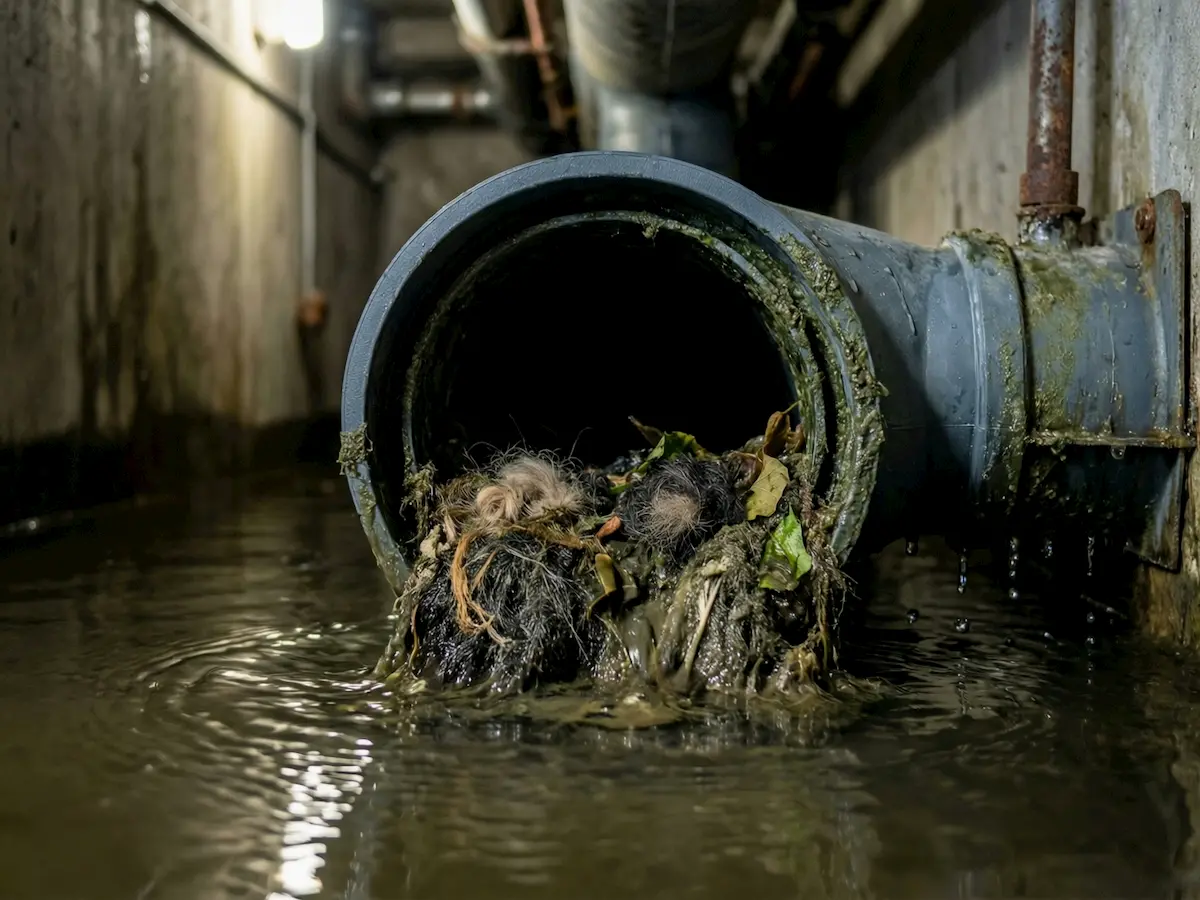
Water backing up at your downspouts during a rainstorm isn’t normal. When underground gutter drains stop working, that water has nowhere to go except toward your foundation, into your basement, or pooling around your home’s exterior. I’ve seen dozens of cases where a simple clog turned into thousands in foundation repairs because homeowners didn’t catch the problem early.
Underground gutter drains move water 10 to 100 feet away from your home’s foundation through buried PVC or corrugated pipes. When these pipes clog with leaves, sediment, or tree roots, the entire drainage system fails.
What Causes Underground Gutter Drains to Clog?
Debris Buildup From Above
Your gutters collect everything that falls on your roof. Leaves, twigs, shingle granules, and dirt wash down through your downspouts and settle inside underground pipes. Over time, this material compacts and blocks water flow completely.
Corrugated pipes present a bigger challenge than smooth PVC because their ribbed interior catches debris more easily. Each ridge inside the pipe acts like a small shelf where particles can settle and build up.
Root Intrusion Through Pipe Walls
Tree roots naturally seek out water sources. When your underground drainage pipes leak even slightly, roots detect the moisture and grow toward it. Once roots penetrate through cracks or joints, they expand inside the pipe until they create a complete blockage.
Perforated drain pipes designed for French drain systems make this problem worse. The intentional holes that allow water to seep out also invite root growth from the start.
Physical Damage to Pipes
Underground pipes fail when vehicles drive over them, during landscaping projects, or simply from age and soil pressure. A cracked pipe allows dirt and debris to enter, which quickly accumulates at the break point.
The crack also disrupts water flow, causing sediment to settle rather than flush through.
Pipes installed without proper slope suffer the same fate. Water needs at least a 1/8-inch drop per foot of pipe to move debris along. Flat or uphill sections create low spots where material settles permanently.
Sediment and Mineral Deposits
Hard water areas see mineral buildup inside drainage pipes over years of use. Calcium and other minerals precipitate out of the water and coat pipe walls, gradually reducing the internal diameter.
Combined with organic debris, these deposits can reduce a 4-inch pipe down to just 2 inches of usable space.
Clay soil particles pose another problem. When water carries fine clay through your drainage system, some of it sticks to pipe walls and builds up layer by layer. This happens faster in pipes with rough interior surfaces.
6 Signs Your Underground Gutter Drain is Clogged
Water Gushing Back Out of Drain Pipes
Walk around your home during the next rainstorm and watch your downspout connections. When underground drains work properly, water flows down and disappears. A clogged system pushes water back up and out through adapter seams.
You’ll see water spraying from where the downspout meets the underground drain connection. This backflow means the blockage has completely stopped water movement through the buried pipe.
Overflowing Gutters During Light Rain
Your gutters shouldn’t overflow unless they’re handling heavy rainfall. When underground drains clog, they create back pressure that prevents water from exiting through downspouts. The gutters fill up completely and spill over the sides, even during moderate storms.
Check your gutters first to rule out surface-level clogs. If the gutters themselves are clean but still overflow, the problem sits underground where you can’t see it.
Standing Water Near Your Foundation
Pools of water that linger for 24 to 48 hours after rain signal drainage failure. The water your underground system should be carrying away is instead collecting right where it causes the most damage.
These soggy spots often appear directly below downspouts or along the path of buried drain lines.
Saturated soil next to your foundation creates hydrostatic pressure that forces moisture through basement walls. This is how clogged drains lead to basement flooding without any surface water actually flowing into your home.
Visible Water Stains on Concrete or Pavement
Look for dark streaks or discoloration on your driveway, sidewalk, or patio near downspout locations. These stains show where water repeatedly backs up and pools because it can’t drain underground.
The mineral content in the water leaves behind visible marks even after the surface dries.
Moss or algae growth in these areas confirms water sits there regularly. These organisms only thrive with consistent moisture that doesn’t evaporate quickly.
Damp Basement Walls or Musty Odors
Moisture problems inside your basement often start with drainage failures outside. When underground drains stop working, water accumulates against your foundation walls and seeps through over time. You might notice:
- Damp spots on basement walls
- White mineral deposits (efflorescence) on concrete
- Musty or moldy smells
- Peeling paint or deteriorating drywall
The U.S. Environmental Protection Agency notes that mold can begin growing within 24 to 48 hours of water exposure. A clogged drain that goes unnoticed for months creates perfect conditions for mold development.
Gutters Sagging or Pulling Away From Roofline
When water can’t drain underground, it backs up into your downspouts and gutters. The extra weight strains gutter hangers and fascia boards. You’ll notice gutters that:
- Sag between support brackets
- Pull away from the roofline
- Have gaps at the seams
- Show visible water damage on the fascia behind them
This damage happens gradually but accelerates quickly once the weight exceeds what the mounting system can handle.
How to Test if Your Underground Gutter Drain is Clogged
The Garden Hose Test
Disconnect your downspout from the underground drain entrance. Insert your garden hose into the drain opening and turn the water to full pressure. Walk to where your drain terminates (the street, storm drain, or dry well) and check for water flow.
Strong water flow at the exit point means your drain is clear. Little to no water, or water backing up at the entrance, confirms a blockage somewhere in the line.
Visual Inspection During Heavy Rain
Stand outside during a rainstorm and watch each downspout for 5 to 10 minutes. Document what you see at each location. Normal operation means water flows smoothly down the downspout and into the underground connection without any backup or overflow.
Pay attention to sounds too. Gurgling or bubbling noises indicate air trapped in the system because water isn’t flowing freely through the pipes.
The Drainage Timing Test
Pour a 5-gallon bucket of water directly into your gutter near a downspout. Time how long it takes for all the water to drain completely. Water should clear out in under 30 seconds for a properly functioning system.
If water takes several minutes to drain or pools in the gutter, you’re dealing with a restriction somewhere in the drainage path. This test works best after you’ve already verified the gutters themselves are clean.
5 Methods to Unclog Underground Gutter Drains
High-Pressure Water Flushing
A standard garden hose provides the simplest starting point. Insert the hose as far into the drain as possible from the exit point (not the entry point). Turn water to maximum pressure and let it run for several minutes.
The backwards flow often dislodges clogs more effectively than pushing from the entry side.
For stubborn blockages, a pressure washer delivers more force. Use a pressure washer wand rated for drain cleaning, not the wide-angle tip for cleaning surfaces. Never exceed 3,000 PSI in plastic pipes or you risk causing damage.
Drain Snake or Auger
A 25 to 50-foot handheld drum auger reaches most residential underground drain lengths. Feed the cable into the drain opening while rotating the drum clockwise. When you hit resistance, continue rotating to break through the clog.
Pull the auger back slowly to extract debris caught on the cable. You’ll likely need several passes to fully clear a packed blockage. This method works well for organic material but struggles with root intrusions.
Professional Hydrojetting
Hydrojetting uses specialized equipment that delivers water at 3,000 to 4,000 PSI through a nozzle designed for pipe cleaning. The high pressure cuts through tree roots, dissolves mineral deposits, and scours pipe walls clean.
Professional hydrojetting services cost between $350 and $600 for most residential applications but provide the most thorough cleaning. This method is not recommended for old or damaged pipes that might collapse under high pressure.
Blow Bag (Drain Bladder)
A blow bag attaches to your garden hose and expands inside the drain when water pressure builds up. As it fills with water, it creates a seal against the pipe walls and forces water through the blockage. The expanding bladder action can clear clogs that resist steady water pressure alone.
Insert the deflated bag into the drain opening and turn on the water gradually. Monitor the upstream side for water backing up. If nothing happens after 5 minutes, the clog is too severe for this method.
Camera Inspection and Targeted Cleaning
When other methods fail or you suspect pipe damage, a drain camera inspection pinpoints the exact location and nature of the blockage. Plumbers use flexible cameras that travel through the entire pipe length while transmitting video to a monitor above ground.
This diagnostic step prevents unnecessary digging and allows contractors to target the problem area specifically. Camera inspections typically cost $200 to $400 but save money when excavation becomes necessary.
How to Prevent Future Underground Drain Clogs
Install Gutter Guards or Leaf Protection
Gutter guards keep leaves and large debris out of your gutter system before they can enter downspouts. Mesh-style guards work best for underground drains because they block even pine needles and seed pods.
Screen or reverse-curve guards allow smaller particles through that can still cause underground clogs over time.
Quality gutter guard systems reduce maintenance requirements by 80% or more. The upfront cost pays for itself within a few years through reduced cleaning expenses and prevented water damage.
Add Downspout Strainers or Filter Boxes
Downspout strainers sit directly on top of your downspout openings. These wire or plastic cages catch debris before it enters the vertical pipe. The tradeoff is that you’ll need to clean the strainers regularly, especially during heavy leaf fall seasons.
Filter boxes install lower on the downspout, closer to ground level where they’re easier to access. They provide a catch basin for debris and often include a cleanout port for easy maintenance. Empty filter boxes every 3 to 6 months depending on your tree coverage.
Schedule Annual Drain Flushing
Flush your underground drains with a garden hose once per year, preferably in late fall after leaves have finished falling. This preventive maintenance clears small accumulations before they compact into solid blockages.
The process takes 15 to 20 minutes per drain line and costs nothing except water.
Mark your calendar for this task each October or November. Combining it with your final gutter cleaning of the season creates a complete drainage system checkup.
Maintain Proper Pipe Slope
New installations or replacement projects need careful attention to slope. Every foot of horizontal pipe should drop at least 1/8 inch toward the outlet. Better installations use 1/4 inch per foot for improved flow and self-cleaning action.
Pipes that run under sidewalks or driveways often lose slope when contractors create a dip to clear the obstacle. Insist on maintaining consistent downward slope throughout the entire run, even if it means digging deeper at certain points.
Keep Trees Away From Drain Lines
Plant new trees at least 15 feet away from underground drainage pipes. Existing trees that threaten your drains might benefit from root barriers installed between the tree and the pipe route. These vertical plastic sheets extend 18 to 24 inches underground and redirect roots downward instead of laterally.
Consider removing trees whose roots have already invaded your drainage system. Root cutting provides only temporary relief because roots regrow within 1 to 2 years. Persistent root problems ultimately require pipe replacement with root-resistant materials.
When to Call a Professional
Persistent Clogs After DIY Attempts
If you’ve tried water flushing and snaking without success, the blockage is too severe for basic methods. Professional equipment and experience become necessary.
Continuing to attempt DIY solutions wastes time and risks damaging pipes through excessive force.
Suspected Pipe Damage or Collapse
Broken or collapsed pipes need excavation and replacement. You’ll notice this when water barely flows even though you can push a snake through the entire length. The snake passes through the break while water pools at the damaged section.
Root Intrusions
Tree roots require professional root-cutting equipment or hydrojetting to clear completely. Standard drain snakes might poke holes through root masses but won’t remove enough material to restore proper flow. Roots also regrow quickly without proper treatment.
No Access to Drain Exit Point
Some underground drains terminate in inaccessible locations like storm sewers or dry wells. Without access to flush backwards from the exit point, professional equipment that works from the entry side becomes necessary.
Cost Breakdown for Professional Drain Cleaning
- Basic drain snaking: $150 to $350 for straightforward clogs within 50 feet of the access point.
- Hydrojetting service: $350 to $600 for complete cleaning of a residential underground drain system.
- Camera inspection: $200 to $400 as a standalone service, often discounted when combined with cleaning.
- Pipe repair/replacement: $1,000 to $3,000 depending on length, depth, and whether excavation crosses hardscaping.
- Root treatment: $400 to $800 for mechanical cutting followed by root-killing chemical treatment.
These prices reflect typical residential applications as of 2026. Complex situations involving deep pipes, difficult access, or extensive damage cost more.
FAQs
How often should underground gutter drains be cleaned?
Flush your drains once per year as preventive maintenance. Homes with heavy tree coverage or older drainage systems benefit from twice-yearly cleaning in spring and fall.
Can I use chemical drain cleaners in underground gutter drains?
No. Chemical drain cleaners designed for household plumbing won’t dissolve the organic debris and sediment that clogs gutter drains. These chemicals also damage PVC pipes and contaminate soil. Use mechanical cleaning methods instead.
Will a clogged underground drain fix itself?
Never. Clogs only worsen over time as more debris accumulates. Water finds alternative paths that cause damage rather than clearing the original blockage. Address clogs as soon as you notice symptoms.
How long do underground gutter drains last?
PVC drain pipes last 50 to 70 years when properly installed and maintained. Corrugated plastic pipes have a shorter 20 to 30-year lifespan. Root intrusion, improper slope, or physical damage shortens these timeframes significantly.
Can I install underground drains myself?
Simple installations on flat terrain with good soil are DIY-friendly for experienced homeowners. Complex projects involving deep trenches, crossing under hardscaping, or challenging terrain should be handled by professionals. Improper slope or pipe selection leads to premature failure.
What’s the difference between a French drain and an underground gutter drain?
Underground gutter drains use solid pipes to carry water away from your home to a specific discharge point. French drains use perforated pipes surrounded by gravel that allow water to disperse into surrounding soil along the entire length. Don’t connect downspouts to perforated French drain pipes.