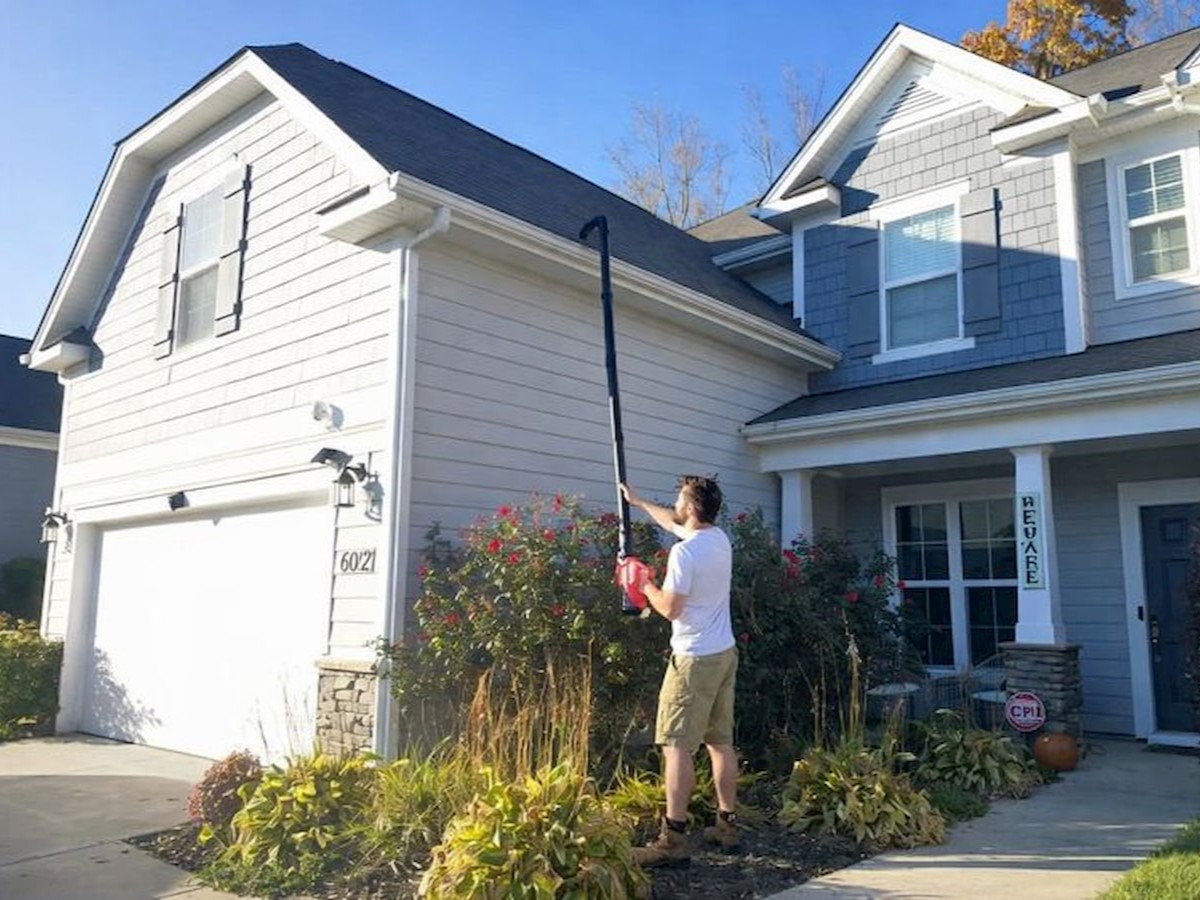
Learning how to clean gutters from the ground keeps you safe and protects your home. You avoid ladder falls while removing leaves, twigs, and debris.
Ground-based methods work for most one-story and two-story homes. You need the right tools and techniques to do the job effectively.
Why Ground-Based Gutter Cleaning Matters
Ladder-related injuries send thousands to emergency rooms each year. The CDC reports 500,000 ladder falls annually in the United States. Gutter cleaning ranks among the top causes of these accidents. Ground-based methods eliminate this risk entirely.
Clogged gutters cause $10,000+ in average repair costs from foundation damage, roof leaks, and siding rot. Water overflow saturates soil around your foundation. This leads to basement flooding and structural cracks. Regular cleaning prevents these expensive problems.
5 Best Tools to Clean Gutters Without a Ladder
Each tool works best for specific debris types and gutter heights. You can choose based on your situation.
Leaf Blower with Gutter Attachment
A leaf blower with gutter attachment clears dry leaves quickly. You connect a curved tube extension to your blower. This reaches gutters from ground level.
- Best for: Dry, loose leaves and pine needles. Works on one-story gutters up to 12 feet high.
- Pros: Fast cleaning. No water mess. You already own the blower.
- Cons: Wet debris stays put. Debris blows across your yard. Noise annoys neighbors.
- Top pick: WORX WA4096 GutterPro Attachment attaches to most blowers. It costs $40 and extends 12 feet.
- Safety tip: Wear eye protection. Debris falls directly below. Clear the area first.
Wet/Dry Vacuum Gutter Cleaning Kit
A wet/dry vacuum gutter cleaning kit sucks debris into the vacuum canister. The Craftsman kit includes two 18-inch extension wands and a hooked nozzle. It fits 2.5-inch vacuum outlets.
- Best for: Wet leaves, sludge, and small twigs. Handles standing water.
- Pros: Contains mess completely. Vacuums both wet and dry material. Reaches second-story gutters with extensions.
- Cons: Heavy to maneuver. Strong suction requires powerful vacuum. Twigs can clog hose.
- Top pick: Craftsman Wet/Dry Vacuum Gutter Cleaning Kit costs $30.
- Setup: Connect wands first. Add nozzle last. Work from downspout outward. Empty canister frequently.
Telescoping Garden Hose Wand
A telescoping garden hose wand uses water pressure to flush debris. The Orbit 58543 extends from 40 to 70 inches. Its curved nozzle aims water into the gutter.
- Best for: Light to moderate debris on one-story homes. You have a hose nearby.
- Pros: Inexpensive at $25-40. Simple operation. No power tools needed.
- Cons: Low pressure struggles with packed debris. Water soaks fascia boards if misdirected. Freezing temperatures make this impossible.
- Technique: Start at downspout. Work backward while spraying toward the outlet. This moves debris the right direction.
- Warning: Avoid spraying under shingles. This lifts them and causes roof leaks.
Pressure Washer Gutter Cleaner
A pressure washer gutter cleaner attaches to your pressure washer wand. The Twinkle Star attachment has dual nozzles that spray forward and backward. It uses 4000 PSI maximum.
- Best for: Caked-on dirt, algae, and heavily compacted debris. Cleans long-neglected gutters.
- Pros: Powerful cleaning. Clears downspouts simultaneously. Fast results.
- Cons: Extreme mess. Can dent aluminum gutters. Requires careful control. You need a pressure washer.
- Top pick: Twinkle Star Gutter Cleaner Attachment
- Safety: Wear waterproof clothing. Protect your eyes. Start at lowest pressure setting. Test on one section first.
Gutter Flusher Hose Attachment
A gutter flusher hose attachment combines high water volume with a curved design. The GutterBlast tool costs $35. It uses your hose’s water pressure multiplied by a narrow nozzle.
- Best for: Quick seasonal cleanouts between major cleanings. Removes surface debris.
- Pros: Affordable. Lightweight. Stores easily.
- Cons: Limited power. Ineffective on heavy sludge. Requires good water pressure.
- Usage: Attach to standard hose. Insert into gutter. Pull toward you while flushing. This method works best in spring and fall.
How to Clean Second-Story Gutters from the Ground
Second-story gutters require longer extensions. You need tools reaching 20+ feet. Most pole systems extend to 24 feet maximum.
- Wet/dry vacuum kits with 12-foot extensions reach most two-story gutters when you hold them overhead. You stand on the ground and extend fully. This gives 18-20 feet reach.
- Pressure washer attachments with telescoping wands reach 24 feet. The Sun Joe SPX-SRL9 extends to 9 feet. Add your washer’s wand for extra length.
- Safety consideration: Second-story cleaning tests your arm strength. The tools become heavy after 20 minutes. Take breaks every 15 minutes. Never overextend backward. This causes falls.
- Camera inspection: Attach a smartphone to a selfie stick. Record video while walking along the house. You spot clogs before cleaning. This saves time and effort.
Step-by-Step: Cleaning Gutters from the Ground Safely
Follow this process for best results.
Step 1: Inspect Gutters with a Camera or Mirror
Attach your phone to a pole. Record the gutter interior. Watch for clogs, sagging sections, and missing hardware. This takes 10 minutes. It prevents surprises.
Step 2: Choose Your Cleaning Method Based on Debris Type
Dry leaves need a leaf blower. Wet sludge needs a vacuum. Packed dirt needs a pressure washer. Match your tool to the problem.
Step 3: Clear Downspouts First
Clogged downspouts back up water. Use a pressure washer nozzle or plumber’s snake. Insert from ground level. Blast upward first. Then spray downward. This clears the clog completely.
Step 4: Work in Sections from the Downspout Outward
Clean 10-foot sections at a time. Start at the downspout. Move away from it while pushing debris toward it. This ensures proper flow direction.
Step 5: Flush and Test Water Flow
Run water through the gutter. Check that it flows freely. Watch the downspout exit. You should see steady water flow. If not, repeat the process.
Cost Comparison: DIY Ground Cleaning vs. Professional Services
DIY ground cleaning costs $50-150 in tools. You buy them once. They last 5+ years. Professional cleaning costs $145-250 for a one-story home. Two-story homes cost $180-360.
You break even after two professional cleanings. Tools pay for themselves quickly. You clean as often as needed. No scheduling delays.
Pros inspect gutters for damage. They spot problems early. They carry insurance. They work faster. You pay for convenience and safety.
You save $300+ annually. You control timing. You learn your gutter system. You spot issues during cleaning.
First cleaning takes 2-3 hours. Practice reduces this to 1 hour. Professionals finish in 30-60 minutes.
How Often Should You Clean Your Gutters?
Clean gutters twice yearly in most regions. Do this in late spring and mid-fall. Spring removes pollen and seed pods. Fall clears leaves before winter.
Tree coverage changes frequency:
- No trees nearby: Once yearly
- Deciduous trees: Twice yearly
- Pine trees: Every three months
- Gutter guards: Once yearly inspection
Climate factors: Cold climates need clean gutters before freeze. Warm climates need clear flow during rainy season. Desert areas need dust removal quarterly.
Signs you need immediate cleaning: Water overflows during rain. Plants grow in gutters. You see pests. Gutters sag from weight.
Do Gutter Guards Eliminate Cleaning?
Gutter guards reduce cleaning frequency. They don’t eliminate it completely. Micro-mesh guards block 95% of debris. You still need occasional cleaning of the guard surface. Homes with gutter guards spend 50% less on annual gutter cleaning.
FAQs
Can you clean gutters from the ground without a ladder?
Yes. Ground-based tools effectively clean first and second-story gutters. You use extended poles, vacuums, and pressure washers. These methods avoid ladder risks completely.
How do you clean gutters that can’t be reached?
Use telescoping poles extending to 24 feet. Attach cameras to inspect first. Choose wet/dry vacuums or pressure washers for power. Consider professional help for third-story gutters.
What is the fastest ground-based gutter cleaning method?
Pressure washer attachments clean fastest. They clear 200 feet per hour. This method works best for heavy debris. Leaf blowers work fastest for dry leaves.
Are gutter cleaning attachments universal?
Most attach to standard hoses, blowers, and vacuums. Check your tool’s outlet size before buying. Most use 2.5-inch connections for vacuums. Pressure washers use quick-connect fittings.
How do you know if gutters need replacing?
Look for sagging sections, cracks, rust holes, and separation from fascia. Water pooling indicates poor pitch. Replace gutters showing these signs. Professional inspection confirms the need.