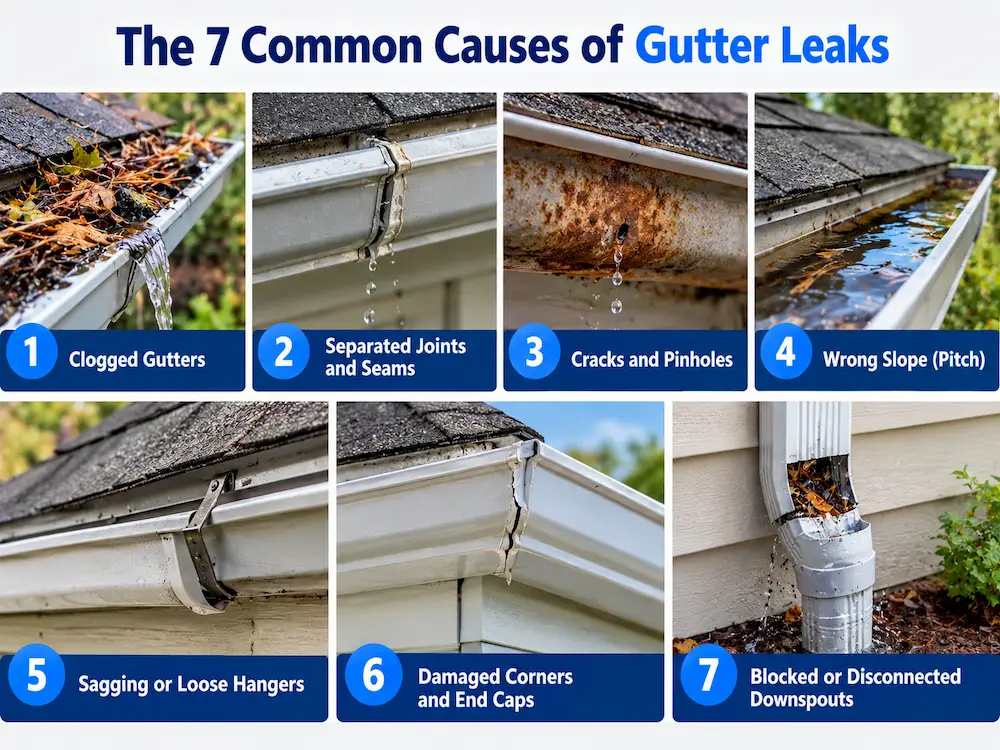
You notice a drip. Then a stain on your siding. Your gutters are leaking. Now you need the best gutter sealant to fix it fast. But the hardware store aisle is overwhelming. As a Philadelphia based gutter contractor since 2006, I have used every type.
The top rain gutter sealant is not one single product. It is the right product for your specific gutter material, leak type, and climate. I will give you my professional recommendations and show you exactly how to apply gutter sealant to stop leaks for good and prevent expensive water damage to your home.
Top Gutter Sealants
Based on thousands of repairs, here are my go-to products.
- For Most Aluminum Gutter Seams: GE All Purpose Silicone Caulk Silicone Sealant. It’s reliable, affordable, and the 100% silicone formula is waterproof and weatherproof.
- For Large Gaps or End Caps: Lexel Clear Elastomeric Sealant. It stretches like silicone but adheres and paints like polyurethane. It’s a professional secret weapon.
- For a Tough, Paintable Seal: Gorilla Waterproof Patch & Seal Tape. This is a butyl-based tape that works on wet surfaces and is shockingly strong.
Why Your Rain Gutter Sealant Matters?
A small gutter leak seems minor. You might ignore it. But that is a costly mistake. The real job of your gutter system is to control massive amounts of water.
A leak redirects that water exactly where you do not want it. Choosing a durable, correct sealant is a critical home maintenance task.
The Direct Link to Foundation Damage
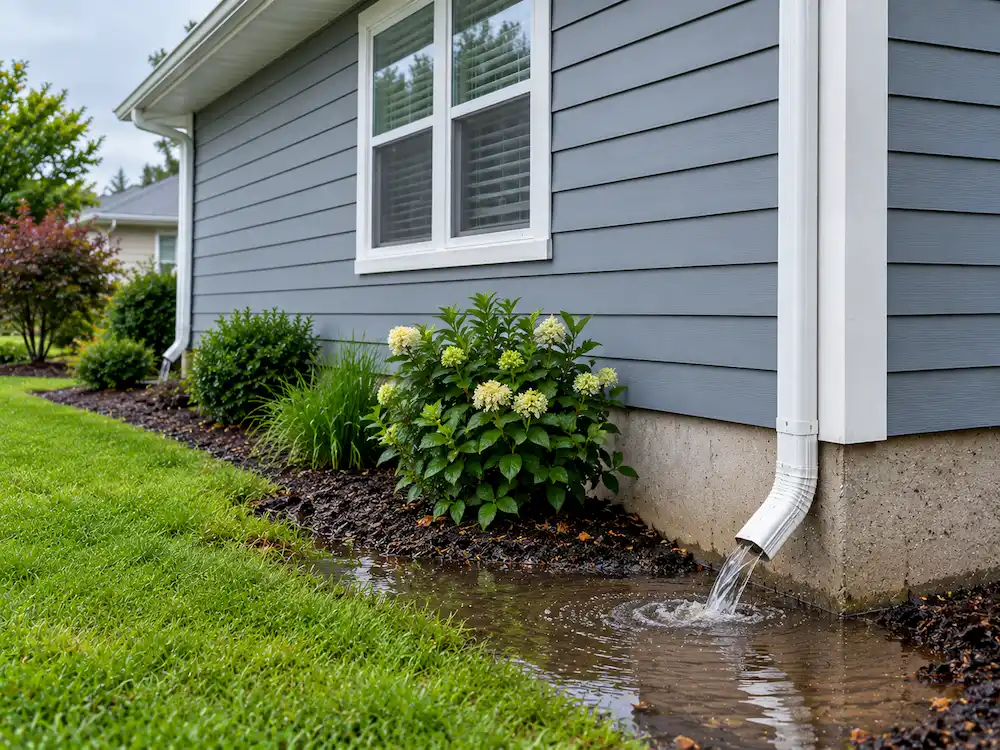
A persistent leak saturates the ground next to your home’s foundation. Over time, this causes soil expansion and contraction.
That movement creates pressure cracks in your foundation walls. Repairing a foundation can cost tens of thousands of dollars. Properly sealed gutters are your first and most affordable line of defense.
Rot, Mold, and Landscape Erosion
Water dripping behind your fascia board leads to wood rot. It can seep into soffits and attic spaces, promoting mold growth.
Constant dripping also destroys your landscaping, washes away mulch, and creates unsightly trenches in your flower beds. A $15 tube of the right sealant prevents all of this.
Types of Gutter Sealant
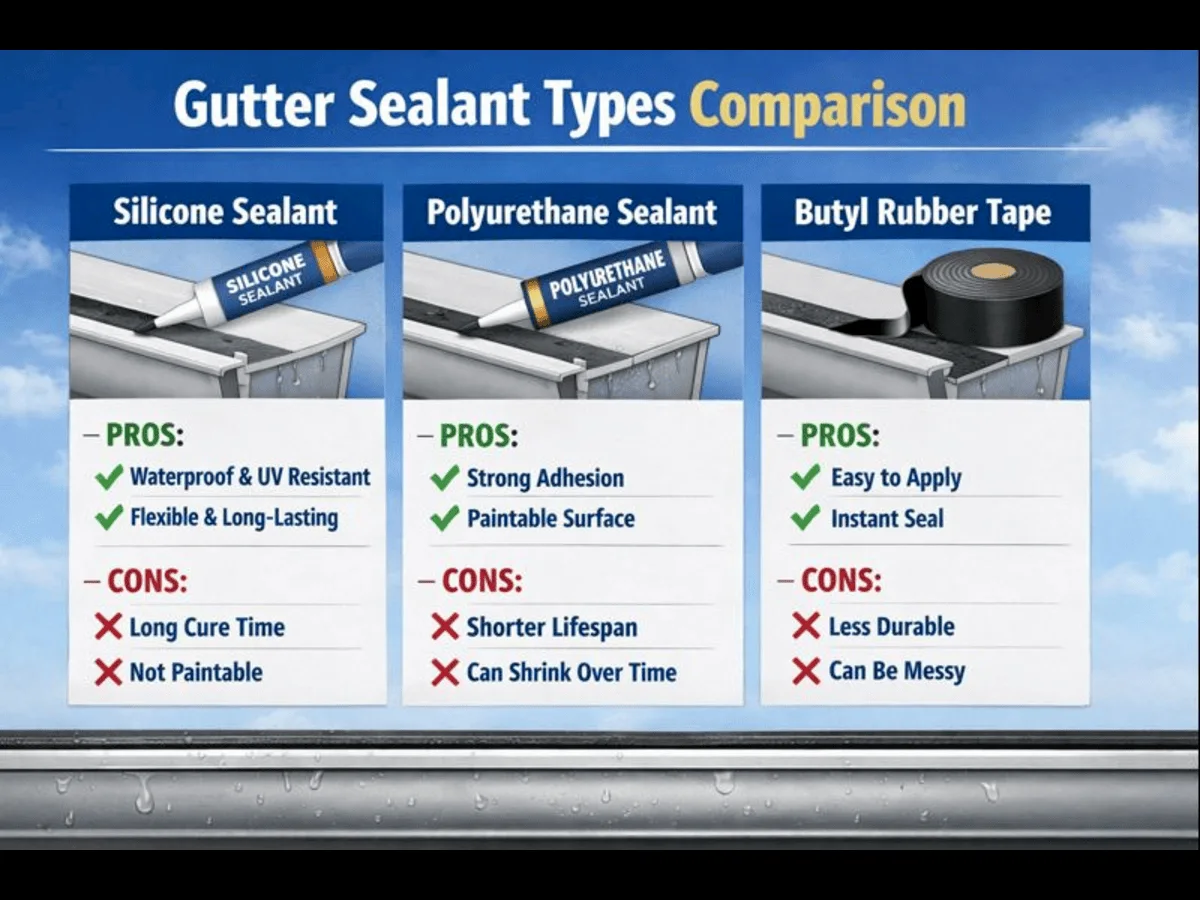
You need to understand the three main material categories. Each has strengths and weaknesses.
1. Silicone Sealant
Silicone is my top choice for most DIY repairs. It remains extremely flexible for its entire life. This means it can handle the expansion and contraction of gutters as temperatures swing without cracking.
- Best for: Seams on aluminum, vinyl, and steel gutters; areas needing high flexibility.
- Pros: Excellent UV and weather resistance, stays flexible, adheres well to most surfaces.
- Cons: Cannot be painted, can be messy to apply, surface must be perfectly dry.
2. Polyurethane Sealant
Polyurethane sealants cure to form a tough, rubbery, and abrasion-resistant seal. They are incredibly durable and paintable, making them ideal for less flexible, permanent joints.
- Best for: End caps, inside corner joints, sealing gutter spikes or screws.
- Pros: Very strong and durable, paintable, good adhesion.
- Cons: Less flexible than silicone, can be difficult to tool and clean up (requires mineral spirits).
3. Butyl Rubber Tape
This is not a liquid sealant. It is a thick, moldable tape with incredible adhesive properties. It is perfect for emergency fixes or awkward spots.
- Best for: Temporary repairs, sealing around gutter hangers, odd-shaped gaps.
- Pros: No cure time, works on damp surfaces, easy to apply.
- Cons: Aesthetic is less clean, can be dislodged by extreme heat or physical impact.
How to Choose the Best Rain Gutter Sealant?
Follow our decision tree to pick the winner for your project.
Match the Sealant to Your Gutter Material
- Aluminum & Vinyl Gutters: Use 100% silicone or a silicone-polyurethane blend. They flex and will not stain.
- Steel & Copper Gutters: Use polyurethane. It bonds aggressively and can be painted to match if needed.
- For all types, ensure the product label says “for gutters” or “for exterior metal.”
Assess the Repair Location and Size
- Small Seams & Hairline Cracks: A standard caulk tube of silicone is perfect.
- Large Gaps or End Caps: Use a high-solids polyurethane sealant for a stronger, gap-filling bond.
- Leak Behind a Spike: Remove the spike, apply butyl tape around the shaft, and re-insert.
Consider Your Climate and Weather
- High UV / Hot Climates: Silicone excels here due to its UV resistance.
- Extreme Freeze/Thaw Cycles: You need maximum flexibility. Silicone is again the best choice.
- Frequent Heavy Rain: Choose a sealant with a high wet-strength rating. Polyurethane often performs well here.
How to Apply Gutter Sealant Like a Gutter Pro
A perfect sealant applied poorly will fail. Here is our field-tested method.
Tools and Safety Gear You Need
- A sturdy ladder
- Work gloves and safety glasses.
- Stiff brush, rag, and isopropyl alcohol or gutter cleaner.
- Caulking gun and utility knife.
- Painter’s tape (for clean lines).
- Tooling tool or damp finger.
Surface Prep is Everything
This is the most skipped and most important step.
- Clean the Area: Remove all dirt, grit, and old flaking sealant with a brush.
- Degrease: Wipe the joint with isopropyl alcohol. This removes invisible oils for maximum adhesion.
- Ensure Dryness: The metal must be completely dry. Wait a full sunny day after rain.
Application and Tooling Techniques
- Load the tube into your caulk gun. Cut the tip at a 45-degree angle for a medium-sized bead.
- Apply a steady, continuous bead directly into the joint. Push the gun, do not pull.
- Immediately tool the bead. Use a tooling tool or your damp finger to press the sealant into the joint. This creates a smooth, concave finish that sheds water.
Curing Time and Final Inspection
Check the product label. Most sealants skin over in 30 minutes but need 24-48 hours to fully cure. Do not let it rain during this time. After curing, run a hose in the gutter above your repair. Check for any drips.
When to Seal, and When to Call a Professional
Apply sealant yourself ONLY for simple seam leaks or small holes.
Call a professional gutter company like N Gutter if:
- You have widespread rust or multiple failing seams (indicating the whole system is aging).
- The leak is at a soldered joint on copper gutters.
- The gutter is sagging or pulling away from the house (this is a hanger issue, not a sealant issue).
- You are not comfortable on a ladder. Your safety always comes first.
Sometimes, a full section replacement is more cost-effective than a complex repair. A pro can assess this quickly. You can learn more about gutter parts and their functions to better understand what might need fixing.
FAQs
Can I apply gutter sealant in cold weather?
You can, but it is not ideal. Most sealants require temperatures above 40°F (4°C) for proper application and curing. Check your product label. In colder weather, butyl tape can be a good alternative.
How long does gutter sealant last?
A high-quality sealant, applied correctly, should last 5-10 years. Silicone tends to last on the longer end of that range. You should inspect your gutter seals during your annual gutter cleaning.
Can I paint over gutter sealant?
You can paint over polyurethane and some hybrid sealants. You cannot paint over 100% silicone. If you need a color match, choose a paintable product or use butyl tape that closely matches your gutter color.
Is gutter sealant the same as roof cement?
No. Roof cement (or asphalt-based sealant) is not designed for gutters. It becomes brittle in cold weather and can melt and drip in extreme heat. Always use a product formulated for metal gutters.