Are gutter guards worth it? You face this question when seasonal cleaning becomes a chore or when water damage threatens your foundation. As a gutter contractor at N Gutter, I help homeowners calculate true investment value, not just sticker price.
Are Gutter Guards Worth It?
After installing gutter systems since 2006, I can tell you gutter guards are worth the investment for specific homeowners in specific situations. They’re not universal solutions. They’re not maintenance-free miracles. But they genuinely help when conditions align.
So should I just install gutter guards and be done with it? This question lands in my inbox at N Gutter at least three to four times a week. Homeowners want straight answers about whether this investment will actually save them money.
After installing gutter protection systems on hundreds of homes, I can tell you the answer isn’t simple. The decision comes down to specific factors about your property, your situation, and what you value most. Some homeowners see returns within two years. Others would spend their money better elsewhere.
Let me walk you through the real numbers, actual performance data, and what I’ve learned from years of crawling around on roofs installing these systems.
The True Cost of Gutter Maintenance Without Protection
Before evaluating gutter guards, you need to understand what you’re spending now. Professional gutter cleaning averages $162 per visit across the United States, though prices swing from $80 to $390 based on your location and roof height.
Most homes need cleaning 2-4 times annually. If large trees surround your property, you might clean quarterly. That puts your annual spend between $160 and $1,560 for professional service. Over ten years, you’re looking at $1,600 to $15,600 just to keep gutters clear.
The hidden costs run deeper. Missed cleanings lead to water damage that affects foundations, basements, and landscaping. Foundation repairs alone can exceed $4,000 for minor issues. Basement flooding remediation ranges from $500 to $10,000 depending on severity and mold growth.
Time matters too. DIY cleaning takes 2-4 hours per session when you factor in setup, actual cleaning, and ladder work. That’s 8-16 hours annually you could spend elsewhere. For professionals earning $50 per hour, that time translates to $400-$800 in opportunity cost.
What Gutter Guard Installation Actually Costs in 2026
Professional installation typically runs $4,334 to $5,168 for a standard 2,000-square-foot home with approximately 200 linear feet of gutters. This figure includes labor, materials, and basic prep work.
Several variables push costs higher or lower. Roof pitch affects accessibility. Steep slopes require extra safety equipment and time. Multi-story homes add complexity. Metal roofs need special mounting hardware. Your geographic location matters too, with coastal and metropolitan areas charging premium rates.
The type of guard you choose dramatically shifts the price. Basic screen systems start around $1,000 installed. Mid-range micro-mesh products land between $2,000-$3,500. Premium reverse-curve systems can exceed $5,000. Material quality makes a difference. Stainless steel micro-mesh outlasts plastic screens by decades.
DIY installation cuts labor costs but comes with trade-offs. Simple foam or brush guards cost $200-$600 in materials. You’ll spend a full weekend installing them properly. Many DIY systems perform poorly compared to professional installations because they don’t seal correctly or match your specific roof configuration.
I’ve seen dozens of homeowners attempt DIY installation, only to call us months later when guards detach during storms or fail to block debris effectively. Poor installation can void roof warranties too. Most manufacturers require professional installation to honor their guarantees.
The Break-Even Point: Running the Numbers
Let’s calculate when gutter guards pay for themselves. Assume you’re spending $400 annually on professional cleaning (twice yearly at $200 each visit). Your guard system costs $4,000 installed.
At this rate, you break even in ten years. That seems like a long time. But factor in reduced foundation risk, eliminated ladder work, and peace of mind during storms. Many homeowners find that worthwhile.
Now consider a different scenario. You clean gutters yourself, spending $0 on professionals but 8 hours annually. If you value your time at $40 per hour, you’re still spending $320 annually in opportunity cost. Add potential injury risk from ladder work. The calculation shifts.
High-maintenance properties change everything. Homes surrounded by mature oak, maple, or pine trees need monthly attention during fall. You’re looking at 6-8 cleanings yearly. At $200 each, that’s $1,200-$1,600 annually. Guards pay for themselves in 2.5-3 years.
Geographic factors accelerate ROI. Wildfire-prone areas see gutter guards as essential fire prevention. Dry leaves and twigs in gutters create kindling that catches embers. One home fire prevented justifies any guard cost. Heavy rainfall regions benefit from improved drainage that prevents overflow damage.
Performance Reality: What Guards Actually Do
During 15 years installing gutter systems, I’ve tested nearly every guard type available. Here’s what actually happens after installation.
Quality micro-mesh guards block approximately 98% of debris. Pine needles, maple seeds, shingle grit, and leaves stay out. Water flows through even during heavy Pacific Northwest downpours. These systems require maintenance only once or twice yearly, usually just a quick rinse with a garden hose.
Mid-tier perforated aluminum guards catch about 80-85% of debris. They work well for homes without coniferous trees. Pine needles slip through the perforations. You’ll still clean gutters annually, but it takes 15 minutes instead of 2 hours.
Cheap foam inserts and brush guards disappoint most homeowners. Foam breaks down after 2-3 years, especially in sunny climates. Small debris embeds in the foam, creating clogs that defeat the purpose. Brush guards let fine material settle at the bottom. You end up removing the entire guard system to clean properly.
Surface tension (reverse curve) guards handle heavy water volume well but struggle with smaller debris. Oak leaves slide off. Pine needles and seeds often enter through the narrow gap. These systems work best in specific conditions, not universally.
Where Gutter Guards Make Sense
Certain situations make gutter guards a smart move. Multi-story homes top the list. Cleaning second or third-story gutters poses real safety risks. Falls from ladders cause thousands of injuries annually.
Homes surrounded by deciduous trees benefit significantly. Maple, oak, ash, and elm trees drop massive amounts of leaves that quickly overwhelm gutters. Guards prevent the twice-monthly cleaning marathon during fall.
Older homeowners or those with mobility challenges find guards particularly valuable. Climbing ladders becomes risky as we age. Guards eliminate this dangerous task. The investment buys safety and independence.
Properties in heavy rainfall areas see clear returns. When gutters overflow regularly, water infiltrates basements, damages foundations, and erodes landscaping. Guards maintain proper flow even during intense storms. Pacific Northwest homeowners know this issue well, with our 150+ days of annual rainfall.
Vacation homes present a unique case. You’re not around to monitor gutter conditions. Clogs develop silently. By the time you visit, water damage has already occurred. Guards provide protection during your absence.
When Gutter Guards Don’t Make Financial Sense
Some homeowners waste money on guard systems. Homes in arid climates with minimal rainfall rarely need them. If you’re getting 12 inches of annual precipitation and no nearby trees, save your money.
Single-story homes with easy gutter access don’t benefit as much. If you can safely clean gutters yourself in 30 minutes twice yearly, guards offer minimal value. Spending $4,000 for convenience seems excessive when the task is manageable.
New homes with recently installed gutters should wait. Your gutter system will last 20-30 years with proper maintenance. Installing guards immediately means you’re banking on staying in the home long enough to see returns. If you plan to sell within five years, you won’t recoup the investment through resale value.
Homes with few trees nearby experience minimal debris. Your gutters might need cleaning once annually or less. The math doesn’t work. You’d spend decades breaking even on guards while paying for occasional cleaning would cost far less.
Extremely steep roofs or complex roof designs can make guard installation difficult and expensive. Custom fabrication adds thousands to the cost. Sometimes the juice isn’t worth the squeeze.
Types of Guards: What Actually Works
Not all guard systems perform equally. Material and design determine effectiveness. Let me break down what I’ve learned from real-world installations.
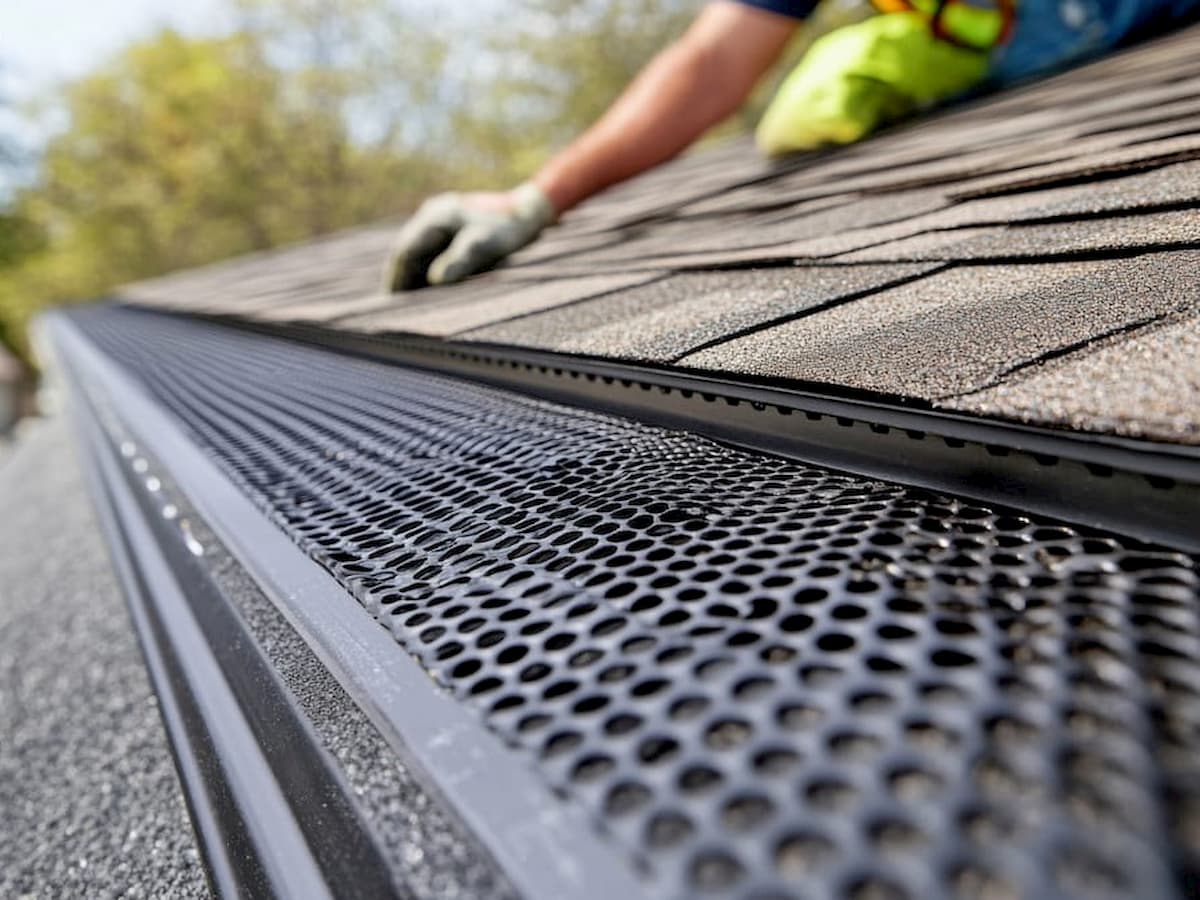
Micro-mesh stainless steel guards represent the current gold standard. The mesh openings measure smaller than a pencil tip. This blocks everything except water and the finest dust particles. These guards mount flush under shingles and over the gutter edge, creating a complete seal.
During our testing, micro-mesh systems caught 99% of debris in heavy leaf environments. They handled rainfall of 6+ inches per hour without overflow. Maintenance involved hosing off accumulated debris quarterly. The systems I installed eight years ago still perform like new. Stainless steel resists corrosion in coastal environments.
The downside? Cost runs $15-$25 per linear foot installed. For 200 feet of gutter, you’re spending $3,000-$5,000. Many homeowners balk at that price. But amortized over a 25-year lifespan, you’re paying $120-$200 annually for protection.
Perforated aluminum guards offer a middle ground. They cost $8-$12 per linear foot installed. Small holes across the surface let water through while blocking larger debris. These work well for broad-leaf trees but struggle with pine needles and seeds.
I recommend perforated guards for homes in deciduous forests without conifers nearby. They deliver 80% of the benefit at 50% of the cost. You’ll clean gutters once yearly instead of 4-6 times, which still represents real savings.
Reverse-curve guards use surface tension to guide water into gutters while deflecting debris. They’re visually unobtrusive and handle heavy water volume effectively. The narrow entry gap can admit smaller debris, though. These systems cost $10-$18 per linear foot.
I install reverse-curve guards on homes with metal roofs or where aesthetic concerns matter. They work reliably in most conditions, though not quite as effectively as micro-mesh designs.
Avoid foam inserts and brush guards unless budget is the only consideration. Foam costs $2-$3 per linear foot. It degrades rapidly in sunlight. UV rays break down the material within 3-5 years. Small seeds and needles embed in the foam, creating stubborn clogs.
Brush guards cost $3-$5 per linear foot. Stiff bristles line the gutter, theoretically catching debris while letting water through. In practice, leaves and needles settle between the bristles.
You must remove the entire brush to clean the gutter. I’ve removed hundreds of these systems after frustrated homeowners realized they created more work, not less.
Installation Quality Makes or Breaks Performance
Even the best guard system fails when installed poorly. I’ve repaired countless installations gone wrong. Common mistakes include improper pitch adjustment, inadequate sealing, missing fasteners, and incorrect overlap.
Guards must follow your gutter’s slope precisely. Even slight misalignment creates low spots where water pools. This standing water invites mosquitoes and mold growth. Debris accumulates in these areas, defeating the guard’s purpose.
The seal between guard and gutter matters enormously. Any gap allows debris entry. Professional installers use continuous mounting systems that eliminate gaps entirely. DIY installations often leave quarter-inch gaps where leaves wedge in.
Fastener placement affects longevity. Guards must attach every 12-18 inches along the gutter. Fewer attachment points allow wind to lift edges. Once one section detaches, the whole system fails progressively. I’ve seen entire guard systems blow off during windstorms because installers skimped on fasteners.
Many guards tuck under the shingle edge. This requires proper technique. You must lift shingles gently without breaking the seal. Forcing guards under shingles can crack old, brittle materials. This creates roof leaks that cost thousands to repair.
Weather conditions during installation matter too. Professionals won’t install guards during rain or high winds. The work requires dry conditions for proper adhesion and sealing. DIY installers often work in whatever weather their schedule allows, compromising quality.
Maintenance: The Part Nobody Tells You
Gutter guard companies market their products as “maintenance-free.” This claim misleads homeowners. No guard system completely eliminates upkeep. The maintenance requirements just change.
Quality micro-mesh guards need cleaning 1-2 times annually instead of 4-6 times. You’ll spend 20 minutes rinsing accumulated debris off the surface using a garden hose. This beats hauling out ladders and scooping wet leaves from gutters.
Some debris types still cause issues. Helicopter seeds from maple trees stick to mesh surfaces. Pine needles mat together, forming a barrier that restricts water flow. Shingle grit accumulates over time, especially during the first 2-3 years after roof installation.
I recommend spring and fall inspection for guarded gutters. Check for debris buildup, proper water flow, and secure attachment. Remove any accumulated material with a soft brush or garden hose. This 30-minute check prevents problems before they develop.
Certain environments demand more attention. Homes near pine forests might need quarterly cleaning. Heavy pollen regions see faster buildup. Storm-prone areas should inspect after major weather events to ensure guards remain secure.
The maintenance burden still decreases dramatically compared to unprotected gutters. You’re avoiding the dangerous, time-consuming work of ladder-based cleaning. Many older homeowners or those with physical limitations find this reduced maintenance justifies the investment even if it’s not zero maintenance.
Real Homeowner Experiences: What 69% Satisfaction Means
A 2025 survey of 1,000 homeowners with installed gutter guards revealed interesting patterns. 69% reported feeling “very satisfied” with their purchase. 30% said they no longer clean gutters at all after installation.
The satisfied group shared common traits. They lived in heavily wooded areas with serious leaf problems. They had previously cleaned gutters 4+ times yearly. They chose quality systems with professional installation. These homeowners saw immediate, tangible benefits that justified the cost.
The less satisfied 31% also shared patterns. Many chose cheap DIY systems that underperformed. Some lived in low-debris environments where guards offered minimal value. Others experienced installation problems that required costly repairs.
Maintenance expectations influenced satisfaction significantly. Homeowners who understood guards reduce but don’t eliminate upkeep reported higher satisfaction. Those expecting zero maintenance felt disappointed when debris accumulated on surfaces.
Long-term performance data shows quality matters. Micro-mesh guards installed 10 years ago still function effectively. Cheap plastic screens failed within 3-5 years, requiring replacement. The satisfied homeowners had essentially made one purchase that lasted. The unsatisfied group faced multiple purchases over the same period.
Alternative Approaches Worth Considering
Gutter guards aren’t the only solution to debris problems. Some alternatives offer better value in specific situations.
Seasonal contracts with gutter cleaning companies provide reliable maintenance without capital investment. You’re paying $300-$600 annually for scheduled service. No upfront costs. No installation risks. When you sell the home, you simply cancel the service.
This approach works well for homeowners planning to move within 5 years. You avoid the sunk cost of guard installation while maintaining proper gutter function. The cleanings come with professional inspection that catches problems early.
Larger gutter sizes can reduce clog frequency. Standard 5-inch gutters overflow easily during heavy rain, especially when partially blocked. Upgrading to 6-inch gutters increases capacity by 40-50%. Debris that would clog a 5-inch system might not affect 6-inch gutters.
I’ve retrofitted dozens of homes with oversized gutters. The improvement is noticeable. These homeowners still clean gutters, but less frequently. The upgrade costs $1,500-$2,500, less than guards. Combined with occasional professional cleaning, this setup serves many properties well.
Strategic tree trimming reduces debris at the source. Cutting back branches that overhang your roof decreases leaf accumulation dramatically. A one-time pruning investment of $500-$1,000 can reduce your gutter cleaning needs by 50-70%.
This approach doesn’t work for everyone. Some trees can’t be trimmed aggressively without harm. Others are protected by local ordinances. But when feasible, it addresses the problem directly rather than managing symptoms.
Enhanced downspout systems can prevent specific issues. Clogged gutters often start at downspouts. Installing downspout filters, guards, or larger-diameter pipes can maintain flow even when gutters contain some debris. These components cost $100-$300 but make a measurable difference.
The Fire Risk Factor: When Guards Become Essential
In wildfire-prone regions, gutter guards transition from optional to essential. Dry leaves and pine needles in gutters create perfect tinder. Wind-borne embers from distant fires can land on your roof, igniting this fuel.
After the 2018 California Camp Fire, investigators found many homes ignited because of debris in gutters and on roofs. The initial structure often wasn’t directly hit by flames. Instead, embers started small fires in vulnerable areas that spread to the building.
If you live in a fire-prone area, gutter guards represent critical fire prevention. Insurance companies increasingly require them for coverage in high-risk zones. Some municipalities mandate guards as part of fire hardening requirements.
Metal micro-mesh guards work best for fire protection. They don’t combust and prevent fuel accumulation. Avoid any system with plastic components. Even if the plastic itself doesn’t burn easily, it can melt and fail when exposed to heat, allowing embers into gutters.
The cost calculation changes completely in fire zones. You’re not comparing guard costs to cleaning savings. You’re weighing a few thousand dollars against potential total home loss. In this context, guards become obvious necessities, not optional conveniences.
Making Your Decision
Let me offer a decision framework based on what I’ve learned from hundreds of installations. Start by honestly assessing your situation.
Count nearby trees within 50 feet of your home. More than five large deciduous trees suggests you’ll benefit from guards. Fewer than three trees means guards might be overkill.
Check your current cleaning frequency. If you clean gutters 4+ times yearly, guards will likely pay for themselves quickly. Twice annually or less makes the financial case weaker.
Consider your physical abilities and safety comfort. Can you safely climb ladders? Do you have balance issues? Falls from ladders cause serious injuries. If gutter cleaning poses safety risks, guards are worthwhile regardless of financial calculations.
Think about your timeline. Planning to stay in the home 10+ years tilts toward installation. Moving within 5 years suggests other options might work better.
Evaluate your budget flexibility. Can you afford $3,000-$5,000 for a quality system? If this strains your finances, consider starting with professional cleaning contracts while saving for guards.
Research local climate patterns. Heavy rainfall, frequent storms, or wildfire risk increases guard value. Arid climates with minimal precipitation reduce benefits.
Get multiple quotes from professional installers. Prices vary significantly between companies. Some offer financing that spreads costs over time. Look for warranties covering both product and installation.
Ask about specific guard performance in your tree environment. Experienced installers know which systems work best with local vegetation. Pine needles require different solutions than oak leaves.
Check references from the installer. Talk to homeowners who had guards installed 3-5 years ago. How do the guards perform now? Any problems developed? This real-world data beats marketing claims.
Consider starting with partial installation. Put guards on the most problematic gutters first. This lets you evaluate performance before committing to a full-home system. Many homeowners do exactly this and expand later if satisfied.
What We Install at N Gutter and Why
When clients ask for recommendations, I base suggestions on their specific situation, not our profit margins. Honesty builds long-term relationships.
For homes surrounded by conifers and deciduous trees, I recommend stainless steel micro-mesh systems. These cost more upfront but deliver reliable, long-term performance. The small mesh openings block pine needles, the most challenging debris type in our region.
For homes with primarily broad-leaf trees, perforated aluminum guards offer excellent value. They cost 30-40% less than micro-mesh while still blocking most debris. Clean them once annually, and they’ll serve you well for 15-20 years.
For budget-conscious homeowners who need some relief but can’t afford premium systems, I suggest strategic partial installation. Put guards on second-story gutters where ladder work is most dangerous. Clean first-story gutters yourself. This hybrid approach costs $1,500-$2,500 while eliminating the riskiest maintenance.
I actively discourage foam and brush guards. Too many clients call frustrated after realizing these systems create more problems than they solve. I’d rather recommend seasonal cleaning contracts than sell products I know will disappoint.
When clients live in fire-prone areas, I insist on metal systems regardless of cost concerns. Fire risk trumps budget considerations. I’ll work with homeowners to find financing or phased installation, but plastic or foam guards aren’t options I’ll install in these zones.
For homes with unique roof configurations, complex valleys, or steep pitches, I always recommend professional installation. DIY attempts on difficult roofs almost always fail. The money you think you’re saving vanishes when you have to hire professionals to fix mistakes.
Future Technology
The gutter guard industry continues evolving. New materials and designs appear regularly. Some innovations deliver real improvements. Others represent marketing hype.
Heated gutter systems combine guards with integrated heating elements. These prevent ice dam formation in cold climates while blocking debris. The systems cost $25-$40 per linear foot installed. They work well in areas with serious winter problems but consume electricity during operation.
Self-cleaning coating technologies promise to make guards shed debris more effectively. Hydrophobic coatings cause water to bead and run off, carrying loose debris with it. Early results look promising, but long-term durability remains unproven. These add $3-$5 per linear foot to guard costs.
Smart monitoring systems connect to your home network, alerting you when guards need attention. Sensors detect water flow changes that indicate clog development. You can check gutter status from your phone and schedule cleaning before problems develop. These systems cost $500-$1,000 plus annual subscription fees.
I’m watching these developments with interest. Some will become mainstream. Others will fade as impractical. For now, traditional micro-mesh guards remain the reliable choice I recommend to most clients.
The Verdict: Are Gutter Guards Worth It?
If you clean gutters 4+ times yearly because of heavy tree coverage, quality guards will pay for themselves within 5 years through saved cleaning costs alone. Factor in reduced water damage risk and eliminated ladder danger, and they make clear financial sense.
If you face mobility challenges or hire professionals for all gutter work, guards offer immediate value. The safety and convenience justify costs regardless of how long payback takes.
If you live in wildfire country, guards represent essential fire prevention, not optional home improvement. The modest cost disappears against the risk of structure loss.
But if you clean gutters once yearly, live in a relatively dry climate, and have easy first-floor access, the financial case weakens substantially. You might wait 15-20 years to break even. Other uses for that $4,000 would serve you better.
The key is making an informed decision based on your specific circumstances, not falling for marketing promises or dismissing guards entirely without considering your situation. Talk to experienced installers. Get multiple quotes. Check references. Match the solution to your actual needs.
When you call N Gutter for consultation, this is exactly the conversation we have. We look at your property, your trees, your roof configuration, and your maintenance history.
Then we provide honest recommendations. That approach has built our business over 20 years, and it’s how I’d advise my own family.
FAQs
How long do gutter guards typically last?
Quality stainless steel micro-mesh guards last 20-25 years with proper maintenance. Aluminum systems typically provide 15-20 years of service. Plastic and foam guards might last only 3-7 years before requiring replacement. Material quality directly affects longevity.
Can I install gutter guards myself to save money?
Simple screen or foam systems work as DIY projects if you’re comfortable on ladders. More complex micro-mesh or reverse-curve systems require professional installation for proper performance and warranty coverage. Improper DIY installation can void your roof warranty and cause water damage.
Do gutter guards work in heavy rain?
Quality micro-mesh and reverse-curve guards handle heavy rainfall effectively when properly installed. Cheap screen or foam guards may allow water overflow during intense storms. The guard’s design and your roof’s pitch both affect heavy rain performance.
Do gutter guards increase home value?
Guards typically don’t increase appraised value dollar-for-dollar. However, they can make your home more attractive to buyers concerned about maintenance. In fire-prone areas, guards may be required for insurance coverage, making them essential for marketability.
Are gutter guards worth it for one-story homes?
Single-story homes benefit less from guards since gutter access is easier and safer. If you’re comfortable cleaning gutters yourself twice yearly, guards offer minimal value. However, if you have physical limitations or heavy tree coverage, guards still make sense regardless of home height.